Setting Up Chick Paper: Optimal Coverage Area and Feed Distribution (Day 9)
Ekstreme Team
Ekstreme Poultry Farm
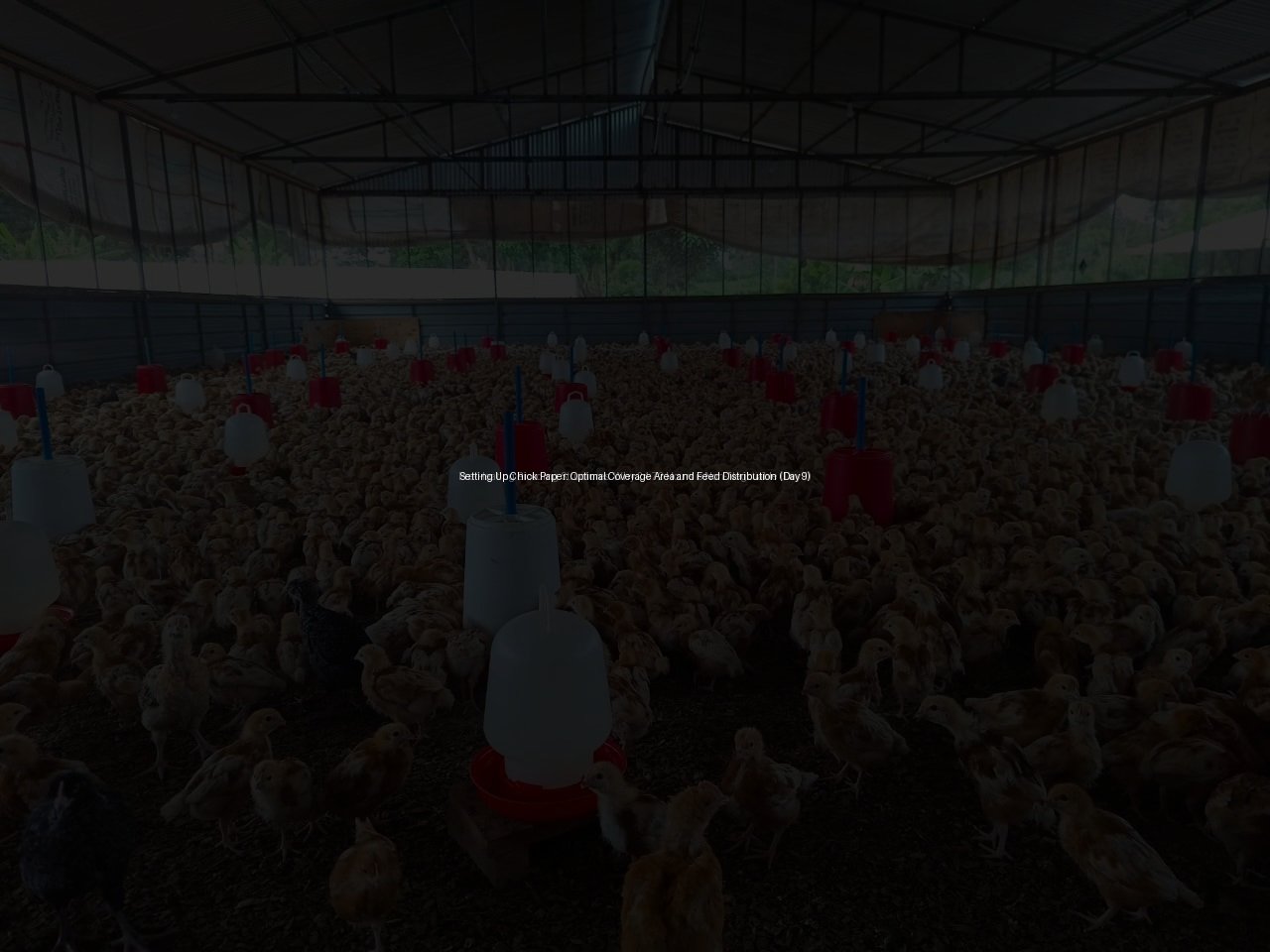
On the ninth day of life, Hy-Line Brown pullets reach a critical developmental milestone where their exploratory instincts accelerate, necessitating a strategic adjustment to the brooding environment to optimize starter feed intake and early behavior conditioning.
The biological imperative for chicks to engage in scratching behaviors peaks during this period, which naturally stimulates gastrointestinal motility and establishes the neural pathways associated with foraging that will define their adult productivity and egg-laying efficiency.
Professional agribusinesses must ensure that at least fifty percent of the total brooding floor area is covered with high-quality brooding paper to maximize the probability of chicks encountering this material during their natural roaming patterns.
A precise visual farm layout is essential, positioning the paper such that it covers the high-traffic zones immediately surrounding the drinkers, as chicks instinctively venturi between water sources and their primary foraging locations, thereby ensuring constant exposure to the scattered feed.
The recommended allocation of fifty to seventy grams of chick starter feed per bird should be evenly dispersed across the paper surface to create a consistent reward mechanism that encourages repeated interaction without leading to localized feed depletion or wastage in shaded corners.
From a practical operational standpoint, farm technicians should perform a morning and afternoon audit of the paper zones to verify that feed distribution remains uniform and that the paper substrates have not become damp or contaminated with fecal matter, which would deter chick engagement.
Maintaining this level of coverage and feed density on Day 9 directly correlates with uniform growth within the flock, as it mitigates the stress of competition for feed and allows smaller, less aggressive individuals to achieve adequate nutrient intake simultaneously with their peers.
By adhering to these precise spatial and nutritional parameters, production managers fortify the foundation for skeletal development and gut health, which are paramount for the long-term robustness and economic viability of the Hy-Line Brown pullet population.
Written by The Ekstreme Team
At Ekstreme Poultry Farm, we are dedicated to sharing insights, updates, and educational content to empower poultry farmers across Kenya.
Learn more about us →