Setting Up Chick Paper: Optimal Coverage Area and Feed Distribution (Day 12)
Ekstreme Team
Ekstreme Poultry Farm
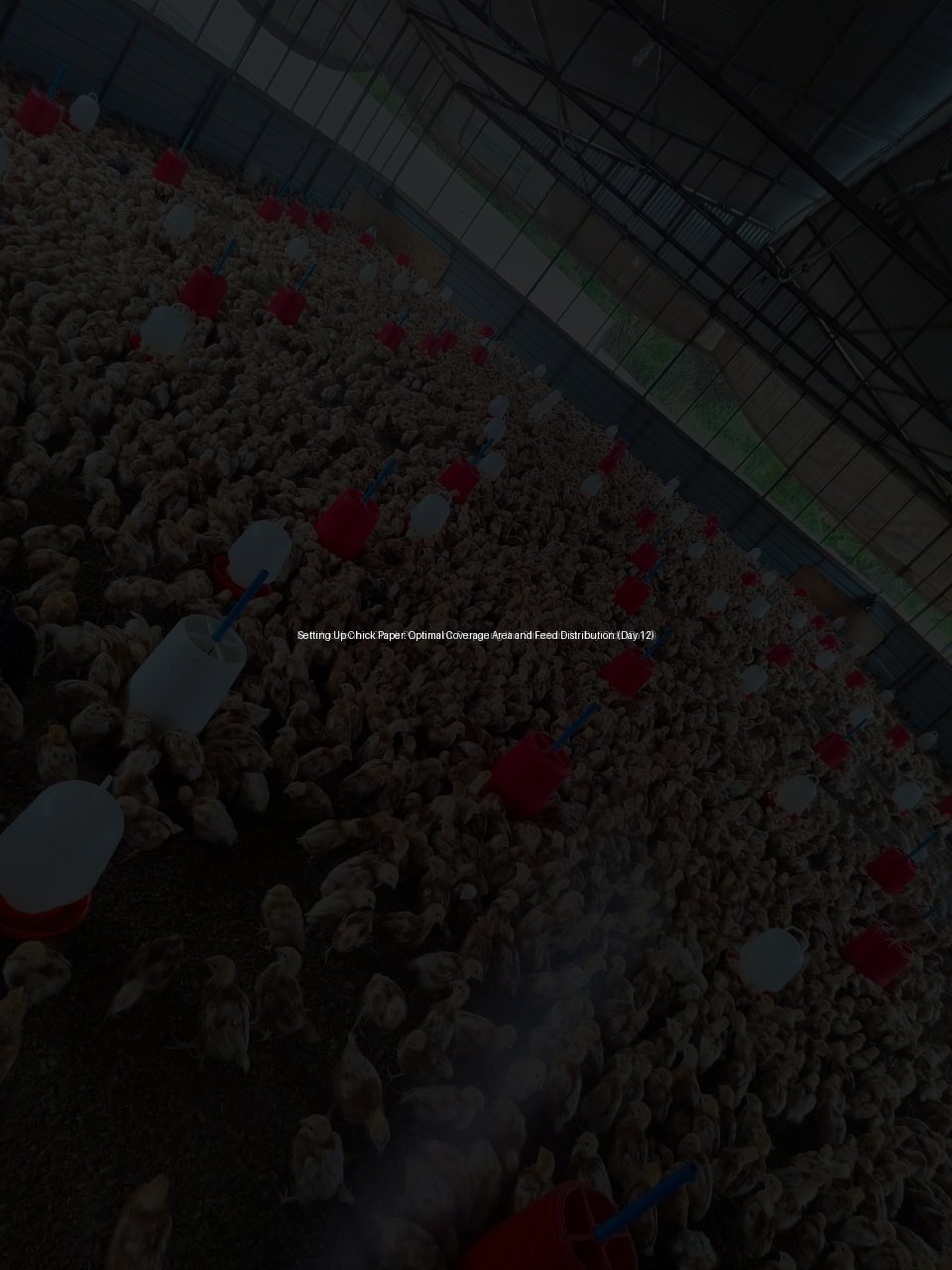
Managing the transition period for Hy-Line Brown pullets requires precise environmental adjustments to support rapid growth and health. By day twelve of the brooding cycle, chicks are becoming more active and their instinct to scratch and peck beneath feeders intensifies. This behavioral shift presents a critical opportunity to reinforce floor hygiene and optimize feed consumption through the strategic deployment of chick paper.
The primary objective at this stage is to ensure that at least fifty percent of the brooding floor area is covered with paper. This specific coverage target is not arbitrary but is designed to create a sufficient surface for the chicks to engage in natural foraging behaviors. As the Hy-Line Brown breed enters a phase of accelerated skeletal and muscular development, the physical act of scratching under paper helps prevent feeder avoidance and encourages immediate feed acceptance upon reaching the pen.
Technical implementation of the feed distribution protocol involves weighing out fifty to seventy grams of feed per chick and dispersing this quantity evenly across the papered areas. This method transforms the floor into a natural seeking environment, forcing the birds to move and consume feed in controlled increments rather than clustering around limited feeder access points. The precise weight of feed per bird ensures that the total amount matches the cumulative intake capacity of the group without leading to significant spillage and subsequent waste.
A visually optimal farm layout dictates that paper should be placed in a pattern that divides the brooding area into distinct zones relative to the water supply stations. This arrangement ensures that chicks must walk a calculated distance between water points to reach the feed paper, thereby reducing the incidence of wet litter. By positioning the feed zones sufficiently apart from drinkers, the facility maintains dry footing, which is essential for preventing coccidian lesions in the developing intestinal tract of the Hy-Line Brown stock.
Proper spacing of the paper strips also facilitates airflow management within the brooding house. If paper is stacked or placed haphazardly, it can trap moisture and heat near the floor, creating microclimates that harbor pathogens. A systematic grid pattern, where each section of paper is strictly positioned away from risers and sidewalls, allows for uniform temperature distribution. This thermal homogeneity ensures that every chick within the flock experiences similar comfort levels and growth potential.
From a practical farming perspective, monitoring the rate of paper consumption provides real-time data on flock health and uniformity. If certain sections of the paper remain untouched while other areas are heavily soiled, it may indicate uneven ventilation or a dominant grouping of aggressive birds. Adjusting the placement of feeders or altering the sheet size can help rebalance the flock dynamics and force less aggressive chicks to emerge from huddles to access the food.
Staff should be trained to inspect the floor daily for signs of torn or displaced paper, which can signal excessive chick activity or inadequate space allocation. Replenishing the paper and feed daily according to the calculated fifty to seventy gram rule keeps the foraging stimulus fresh and prevents the buildup of moldy feed particles. This consistent routine builds a conditioned response in the birds, linking the visual cue of white paper with the immediate availability of nutrients.
Finally, the economic impact of this protocol cannot be overstated for professional agribusinesses. By preventing feed waste and promoting early ad libitum eating habits, the farm achieves better feed conversion ratios critical for later production performance. The discipline observed on day twelve lays the foundation for a robust and disciplined flock, ensuring that the Hy-Line Brown pullets reach market weight specifications with minimal mortality and maximum consistency.
Written by The Ekstreme Team
At Ekstreme Poultry Farm, we are dedicated to sharing insights, updates, and educational content to empower poultry farmers across Kenya.
Learn more about us →