Commercial Layer vs. Dual-Purpose Brooding: Temperature and Space Comparison (Day 4)
Ekstreme Team
Ekstreme Poultry Farm
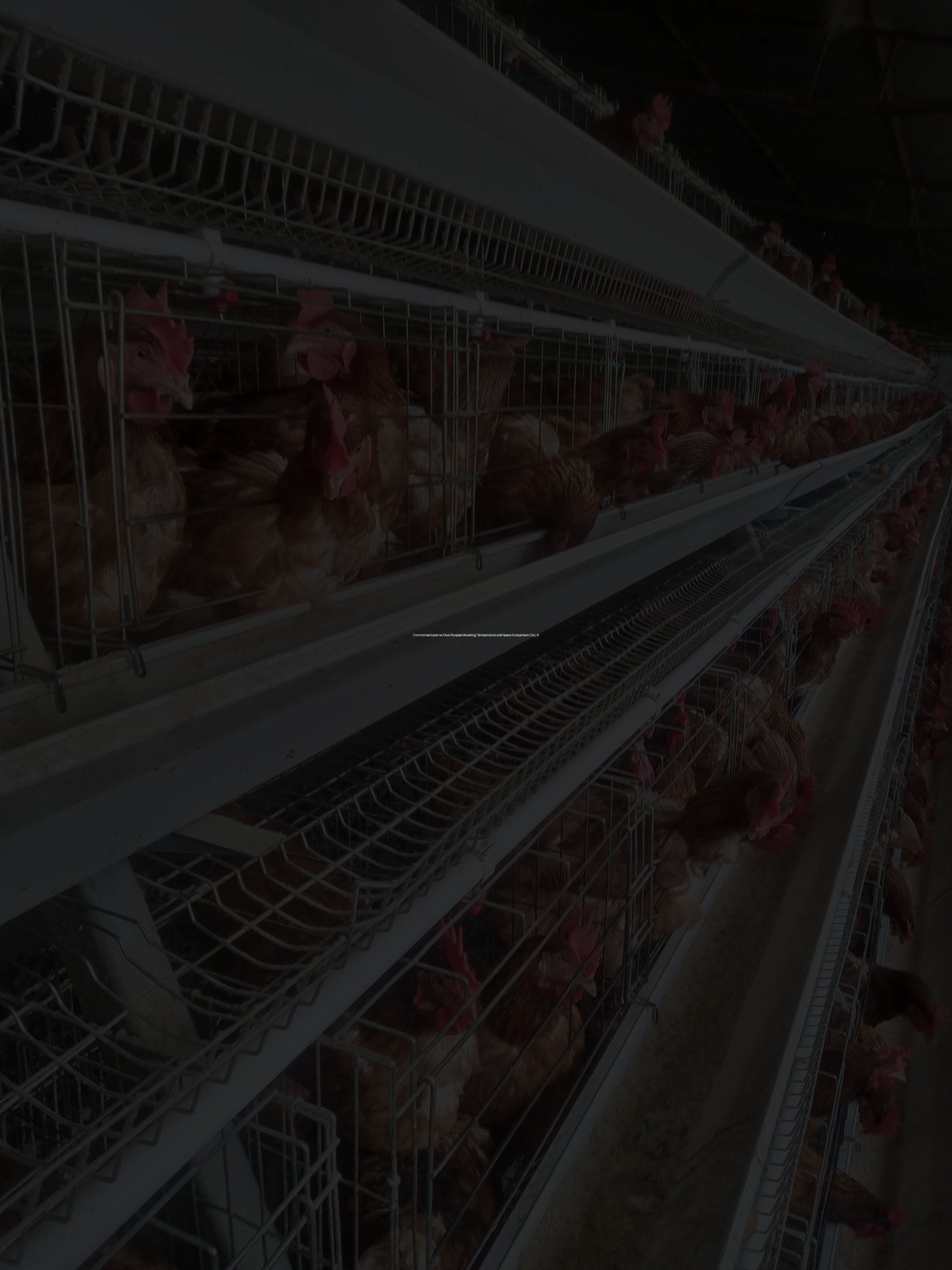
Day four of the brooding period represents a critical inflection point where physiological resilience begins to form, yet vulnerability to environmental stress remains at its peak. For professional agribusinesses managing mixed-flock operations or evaluating multi-genetic strategies, understanding the divergent requirements between specialized commercial layers and dual-purpose breeds is essential for optimizing live weights and cull rates. This analysis focuses on two representative genetic lines, Hy-Line and Kenbro, which exhibit fundamentally different thermal preferences and spatial tolerances during this specific developmental window.
The Hy-Line commercial layer is engineered for maximum egg production efficiency, which necessitates a strict thermal envelope. On day four, this breed requires a precise temperature range of 33 to 36 degrees Celsius to maintain metabolic stability and encourage feed intake. This narrow window reflects their high density farming paradigm, where heat transfer is maximized through close proximity, but only if the ambient air is tightly controlled to prevent hot spots or cool drafts that can trigger early mortality.
In contrast, the Kenbro dual-purpose breed demonstrates a broader thermal adaptability, with a target broker temperature of 32 degrees Celsius. This slightly lower ideal temperature aligns with its semi-intensive management model. The Kenbro line is bred for foraging instincts and robustness, meaning it does not rely on the same degree of external thermal input to maintain body heat as the commercial layer does, allowing for more flexible environment control systems that prioritize airflow over peak heat retention.
Space planning on day four further differentiates these two systems. The Hy-Line operation typically utilizes high-density brooding, which facilitates social thermoregulation among chicks but demands rigorous air exchange to manage ammonia buildup and humidity. Conversely, the Kenbro setup favors semi-intensive outdoor space planning, where chicks are provided with more square footage to move, reducing the intensity of waste concentration per unit area and lowering the immediate biosecurity pressure associated with high stocking densities.
A comparison of heat tolerance reveals that while the Hy-Line performs optimally at the higher end of the 33-36 degree scale, it suffers significant performance depression outside this band. The Kenbro line, operating at 32 degrees, shows less sensitivity to minor temperature fluctuations, suggesting a more forgiving management profile for environments where HVAC precision may be economically constrained or where outdoor weather variability plays a larger role in the microclimate.
Early mortality factors are heavily influenced by the mismatch between breed expectations and provided conditions. In intensive Hy-Line setups, the primary risks are heat stress at the edges of the brooder and cold stress if the perimeter heating fails, leading to huddling and trampling. In semi-intensive Kenbro setups, the primary risks shift toward exposure to wind and uneven ground temperatures, which can cause chilling in young chicks that have not yet developed full plumage, despite the breed's relative hardiness.
The implementation of these metrics requires a calibrated approach to monitoring. For the Hy-Line, infrared thermography and continuous air temperature logging are necessary to ensure the 33-36 degree target is met uniformly across the high-density area. For the Kenbro, monitoring should focus on the ratio of indoor to outdoor access and the thermal comfort of the ground surface, adjusting the 32 degree air target based on the observed behavior of the flock, such as spreading out or packing together.
From a practical agribusiness perspective, the choice between these systems on day four is not merely a matter of comfort but a strategic economic decision. The high-density commercial model allows for faster turnover and higher initial stocking efficiency, but it requires capital-intensive infrastructure to maintain precise thermal controls. The semi-intensive dual-purpose model offers a buffer against energy costs and infrastructure failures, but it requires more land area and potentially lower overall chick density per square meter of operational space.
Ultimately, successful day-four management depends on aligning the biological needs of the selected breed with the capacity of the facility. Professional operators must evaluate whether their infrastructure supports the strict thermal and spatial demands of the Hy-Line commercial layer or if the operational flexibility of the Kenbro dual-purpose system better suits their long-term resource allocation and risk management strategies.
This comparative framework serves as a foundational reference for adjusting brooding protocols as the chicks progress through the first week. By strictly adhering to the 33-36 degree standard for Hy-Line and the 32 degree semi-intensive protocol for Kenbro during day four, producers can establish the baseline health metrics necessary for predictable growth rates and reduced veterinary intervention in the subsequent developmental phases.
Written by The Ekstreme Team
At Ekstreme Poultry Farm, we are dedicated to sharing insights, updates, and educational content to empower poultry farmers across Kenya.
Learn more about us →