
Kenchic Kenbro Chick Placement: Preparing the Structure for Day-Olds (Day 8)
Ekstreme Team
Ekstreme Poultry Farm
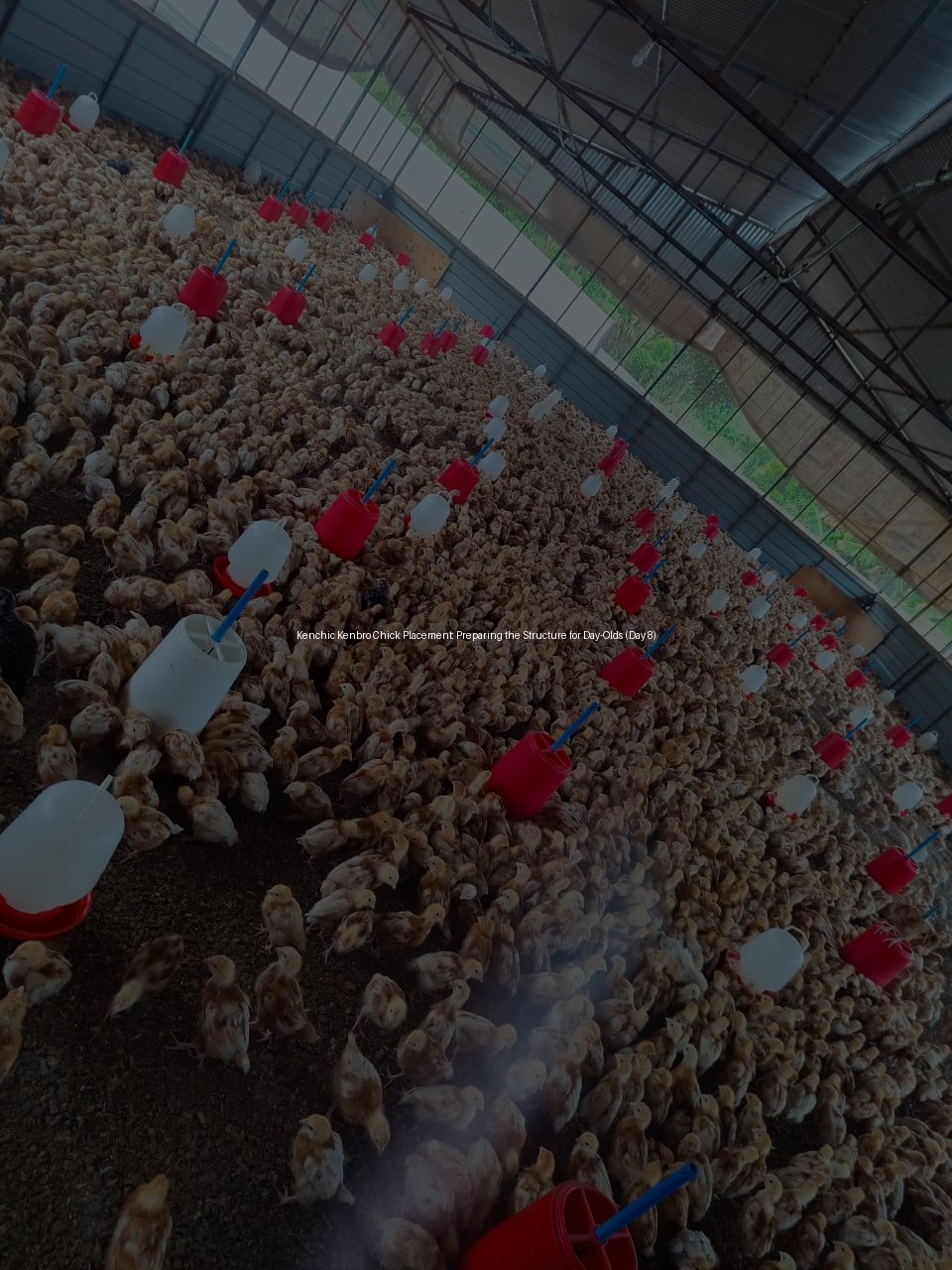
The eighth day marks a critical transition in the Kenbro chick rearing cycle, serving as the final operational checkpoint before the arrival of day-old chicks. For dual-purpose and Kienyeji farmers managing this heritage breed, the success of the brooding phase is determined almost entirely by the structural readiness of the housing unit. Kenbro chicks possess moderate thermal resistance but are highly sensitive to environmental fluctuations during their first week, making precise structural preparation non-negotiable for survival and uniform growth.
Before any biological material enters the structure, the primary objective is to achieve and stabilize a target internal temperature of 32 degrees Celsius. This pre-heating phase must be completed well before the transport vehicles arrive, ensuring that the thermal mass of the walls, floor, and equipment has fully absorbed the energy. Farmers should monitor this stability using at least three calibrated thermometers placed at chick level within the brooding circle, confirming that the temperature remains steady without exceeding the safe threshold for extended periods.
Sanitisation is the foundation of a healthy start for Kenbro day-olds, requiring a rigorous three-step cleaning protocol for the brooding house. The structure must first be free of all previous litter and waste, followed by a thorough washing with a mild alkali solution to dissolve organic matter. The final step involves the application of a contact disinfectant that remains effective against common Newcastle disease and Gumboro pathogens, with a specific wait time to allow for proper chemical action before the air is ventilated again.
The placement of feeding and drinking equipment is dictated by strict spatial metrics to encourage early feeding and drinking in Kenbro chicks. All feeders and drinkers must be positioned within one metre of the primary heat source, creating a warm gradient zone that naturally attracts the chicks. This proximity reduces the energy expenditure required for a new chick to access nutrients, which is vital for establishing intestinal flora and immune function immediately upon arrival.
Ventilation balance represents a delicate technical challenge during day eight, as the house must be closed enough to retain heat but open enough to remove ammonia and carbon dioxide. Properly adjusted sidewall vents should allow for a slight negative pressure, drawing fresh air from the lower levels while expelling waste gases upward. The goal is to maintain air quality without creating drafts that could cool the chicks below their comfort zone of 32 degrees Celsius.
The bedding material, typically dry wood shavings or rice hulls, must be spread to a uniform depth of five to seven centimetres across the entire living area. This depth provides essential insulation from the cold floor, which is a significant heat sink that can drain body heat from brooding Kenbro chicks. The bedding should be clean, free of dust, and pre-treated with a fungicide to prevent the rapid growth of pathogens in the warm, humid environment of the brooding house.
Lighting infrastructure requires adjustment to support the visual orientation of the chicks upon entry. A uniform light coverage of two to four lux over the feeding and watering area is recommended to stimulate activity and pecking behavior. Avoid using lights that flicker or cast harsh shadows, as these can cause stress and pecking issues in the dense Kenbro population, leading to uneven feed consumption and potential injury within hours of arrival.
A final pre-arrival inspection checklist is essential to catch any mechanical failures in the brooding system. Verify that all heaters, infrared lamps, or radiant heat sources are functioning correctly and that the thermostat controls respond accurately to changes in temperature. Check for any gaps in the house structure that might allow draughts, and ensure that the water lines are free of blockages to guarantee a continuous supply of clean water for the expected intake levels of day-old Kenbro chicks.
The practical takeaway for the farmer is that day eight is not merely a waiting period but an active phase of structural calibration and system verification. By strictly adhering to the 32 degrees Celsius pre-heat standard and the one-metre equipment radius, farmers create a controlled microclimate that aligns with the physiological needs of the Kenbro breed. This proactive approach minimizes mortality risk and sets the foundation for a strong, uniform flock development throughout the growth period.
Written by The Ekstreme Team
At Ekstreme Poultry Farm, we are dedicated to sharing insights, updates, and educational content to empower poultry farmers across Kenya.
Learn more about us →