Kenbro Kienyeji Chick Mash: Day 0 to Day 14 Complete Feeding Schedule (Day 5)
Ekstreme Team
Ekstreme Poultry Farm
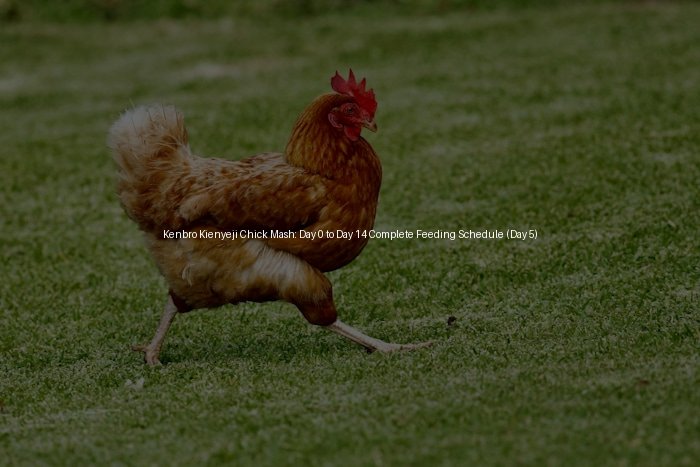
Kenbro Kienyeji chicks enter a critical growth phase during their first two weeks of life, marking the foundation for their future productivity as dual-purpose birds. By Day 5, these chicks have transitioned from the initial brooding adaptation period into active growth, where their metabolic demands for protein and energy skyrocket to support rapid feathering and muscle development. Understanding the specific biological metrics of the Kenbro breed is essential for farmers, as this strain is selected for its resilience and efficient feed conversion, making precise nutritional management at this stage vital for long-term flock health and economic viability.
The cornerstone of managing this phase is the strict adherence to the Fugo Kienyeji Chick Mash standard, which targets a daily consumption of 455 to 500 grams per chick. This specific range is not arbitrary but is calculated to ensure that the chicks receive adequate amino acids for skeletal structuring without overfeeding, which can lead to metabolic disorders. Maintaining this precise intake helps the birds build lean muscle mass efficiently, ensuring that they reach target weights at subsequent growth stages and preparing them for the transition to grower feed by the end of the two-week window.
To implement this standard effectively, farmers must utilize a rigorous daily feed measurement chart tailored to their specific flock size. For a small flock of 100 birds, the daily requirement falls between 45.5 and 50 kilograms of mash, which should be divided into four to five equal feedings throughout the day to maintain consistent energy levels and prevent cannibalism often triggered by hunger or competition.
For mid-scale operations managing 500 Kenbro Kienyeji chicks, the total daily feed allocation must be carefully calculated to range between 227.5 and 250 kilograms. At this scale, hand-feeding becomes impractical, and farmers should employ automated tray systems that allow for continuous access while still enabling the monitoring of consumption rates. Splitting this volume into multiple smaller portions helps ensure that all birds, including weaker individuals, have equal access to the nutrients required to meet the 455 to 500-gram individual target.
Large-scale commercial flocks of 1000 birds require a massive daily input ranging from 455 to 500 kilograms of Fugo Kienyeji Chick Mash. Managing such volumes requires a systematic approach to feed distribution to avoid wastage and spoilage
especially in humid environments where mash can absorb moisture and mold. Farmers in these categories should use calibrated dispenser hoppers that dispense feed at consistent intervals
ensuring that the total daily output remains within the strict target range without excess that remains uneaten and contaminated.
Accurate measurement is the primary defense against feed wastage
a major hidden cost in poultry farming. Tools such as digital scales or calibrated buckets should be used to measure the exact amount of mash dispensed each morning and evening. By tracking the difference between the amount fed and any residue left in trays or feeders at fixed intervals
farmers can adjust their distribution schedules to ensure that the actual consumption aligns with the theoretical target
thereby maximizing return on investment.
The practical takeaway for Kenbro dual-purpose and Kienyeji farmers is that consistency in this early diet dictates the efficiency of the entire production cycle. By strictly enforcing the 455 to 500-gram daily target from Day 0 to Day 14
farmers reduce the risk of developmental stunting in chicks that may have been underfed during the initial brooding phase. This phase sets the trajectory for feathering quality and weight gain
meaning that chicks reaching these metrics will transition more smoothly into the grower stage with higher survival rates and better uniformity within the flock.
Furthermore
monitoring the physical appearance of the birds on Day 5 provides immediate feedback on whether the feeding program is effective. Well-fed Kenbro chicks will exhibit clean feathers
bright eyes
and active pecking behavior
while a significant number of dull or lethargic birds may indicate that the feed quantity is insufficient or that the nutritional density of the mash is not meeting their current metabolic needs. Regular observation allows for immediate correction of any deviations from the planned feeding chart before they become irreversible issues.
Investing in the precision of the first two weeks
specifically focusing on the Day 5 benchmark
ensures that the genetic potential of the Kenbro breed is fully realized. As the flock moves toward the two-week mark
the stable intake of high-quality chick mash will result in a robust brood that is less susceptible to disease and more capable of handling the environmental stressors associated with raising dual-purpose poultry. This disciplined approach to early nutrition is the most cost-effective strategy for achieving high market value in both meat and egg production later in the production cycle.
In conclusion
the successful management of Kenbro Kienyeji chicks through Day 5 and beyond depends on a meticulous execution of the daily feeding schedule. By adhering to the 455 to 500-gram target
utilizing flock-size-specific measurement charts
and maintaining vigilant observation of bird health
farmers can establish a solid foundation for their operations. This phase of strict nutritional discipline not only prevents waste but also guarantees that every chick has the necessary resources to thrive
ultimately leading to a profitable and sustainable poultry enterprise.
Written by The Ekstreme Team
At Ekstreme Poultry Farm, we are dedicated to sharing insights, updates, and educational content to empower poultry farmers across Kenya.
Learn more about us →