Kenbro Kienyeji Chick Mash: Day 0 to Day 14 Complete Feeding Schedule (Day 1)
Ekstreme Team
Ekstreme Poultry Farm
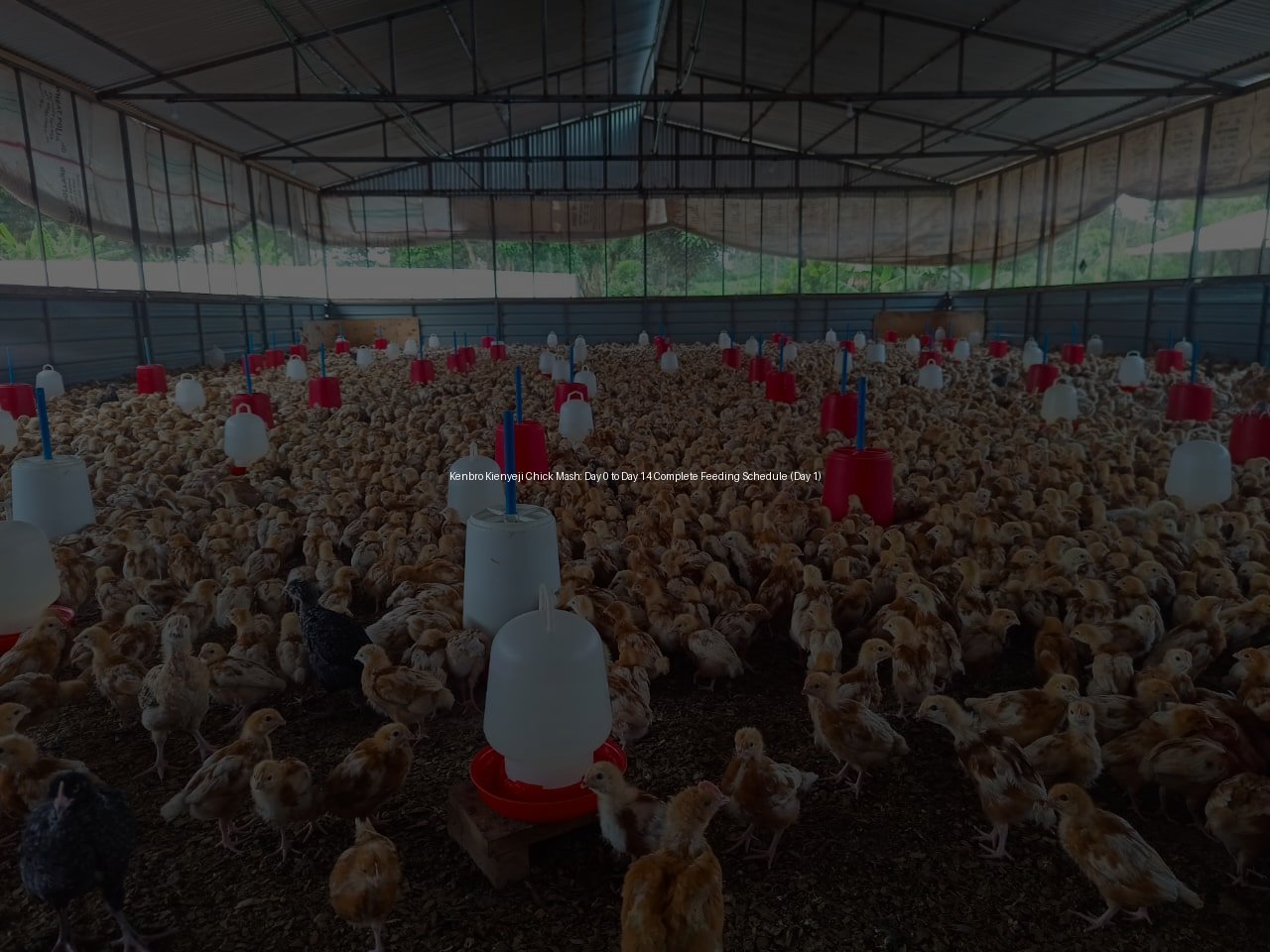
The Kenbro Kienyeji chicken is a hardy dual-purpose breed known for its rapid growth rate and robust disease resistance, making it ideal for smallholder farmers. In the critical first fourteen days of life, chicks require a specialized starter feed to establish strong gastrointestinal health and immune function. This guide focuses on Day 1, setting the foundation for a successful flock by introducing the specific nutritional requirements of the breed during this sensitive developmental stage.
For the first two weeks, the standard target for Fugo Kienyeji Chick Mash is strictly defined between 455 and 500 grams per chick. This precise range ensures that the birds receive adequate energy and protein to support their early skeletal development and organ maturation without causing wastage or digestive issues. Adhering to this metric is essential for maintaining the projected weight gain curves associated with the Kenbro variety.
Implementing a daily feed measurement chart by flock size is the most effective technical step to prevent overfeeding and conserve resources. This method requires calculating the total feed volume based on the number of birds, which minimizes spillage and allows for accurate tracking of consumption rates. Farmers should prepare a simple reference table to guide daily prep, ensuring consistency across different phases of the rearing cycle.
For a small flock of 100 birds, the total daily feed requirement on Day 1 falls between 45.5 kg and 50.0 kg of mash. To manage this volume efficiently, farmers should divide this total into several smaller portions throughout the day rather than providing it all at once. This feeding strategy encourages frequent eating habits and reduces the risk of spoilage in warm environments common in many regions.
Scaling up to a medium flock of 500 birds requires a total daily allocation of 227.5 kg to 250.0 kg. At this scale, manual measurement becomes difficult, so using a standardized scoop or bucket with known weight capacity is recommended. Marking the fill line on these containers helps ensure that each chick receives the correct portion, even when the pen is crowded and individual access to feed is limited.
For large-scale operations with 1000 birds, the total daily feed volume ranges from 455.0 kg to 500.0 kg. This significant quantity necessitates the use of automated feeders or carefully managed bulk bins to distribute the mash evenly. Farmers must monitor the feeder fill levels frequently to ensure that no bird is left without access to fresh feed, which can lead to stress and uneven growth within the flock.
The practical takeaway for dual-purpose and Kienyeji farmers is that consistency in measuring feed is just as important as the quality of the mash itself. By adhering to the strict 455-500g per chick target, farmers can predictably achieve market-ready weights by the end of the brooding period. This precision also allows for better financial planning, as feed costs represent the majority of production expenses in poultry farming.
On Day 1, it is crucial to ensure that the mash is fresh and properly conditioned to control dust and clumping. Wetting the feed slightly can improve palatability for newborn chicks, but excess moisture must be avoided to prevent mold growth. Using the measurement chart helps in preparing only the amount that will be consumed within a few hours, ensuring that every grain is utilized effectively without leaving stale feed in the trays.
Monitoring chick behavior in response to feed availability is a key indicator of feeding success. Healthy Kenbro chicks will show active pecking and a uniform size within the first few days. If some birds appear smaller or less active, it may indicate uneven feed distribution, prompting a review of the feeder setup and the measurement process. Adjusting the feeding frequency or the number of feeders can resolve these issues quickly.
Establishing the Day 1 feeding protocol correctly sets the trajectory for the entire rearing period. By using the provided metrics and measurement chart, farmers can maximize the genetic potential of the Kenbro breed. This disciplined approach to nutrition not only improves health outcomes but also enhances the overall profitability of the poultry enterprise through reduced waste and optimized growth performance.
Written by The Ekstreme Team
At Ekstreme Poultry Farm, we are dedicated to sharing insights, updates, and educational content to empower poultry farmers across Kenya.
Learn more about us →