Day of Hatch Infrared Beak Treatment (IRBT) Management and Post-Op Care (Day 6)
Ekstreme Team
Ekstreme Poultry Farm
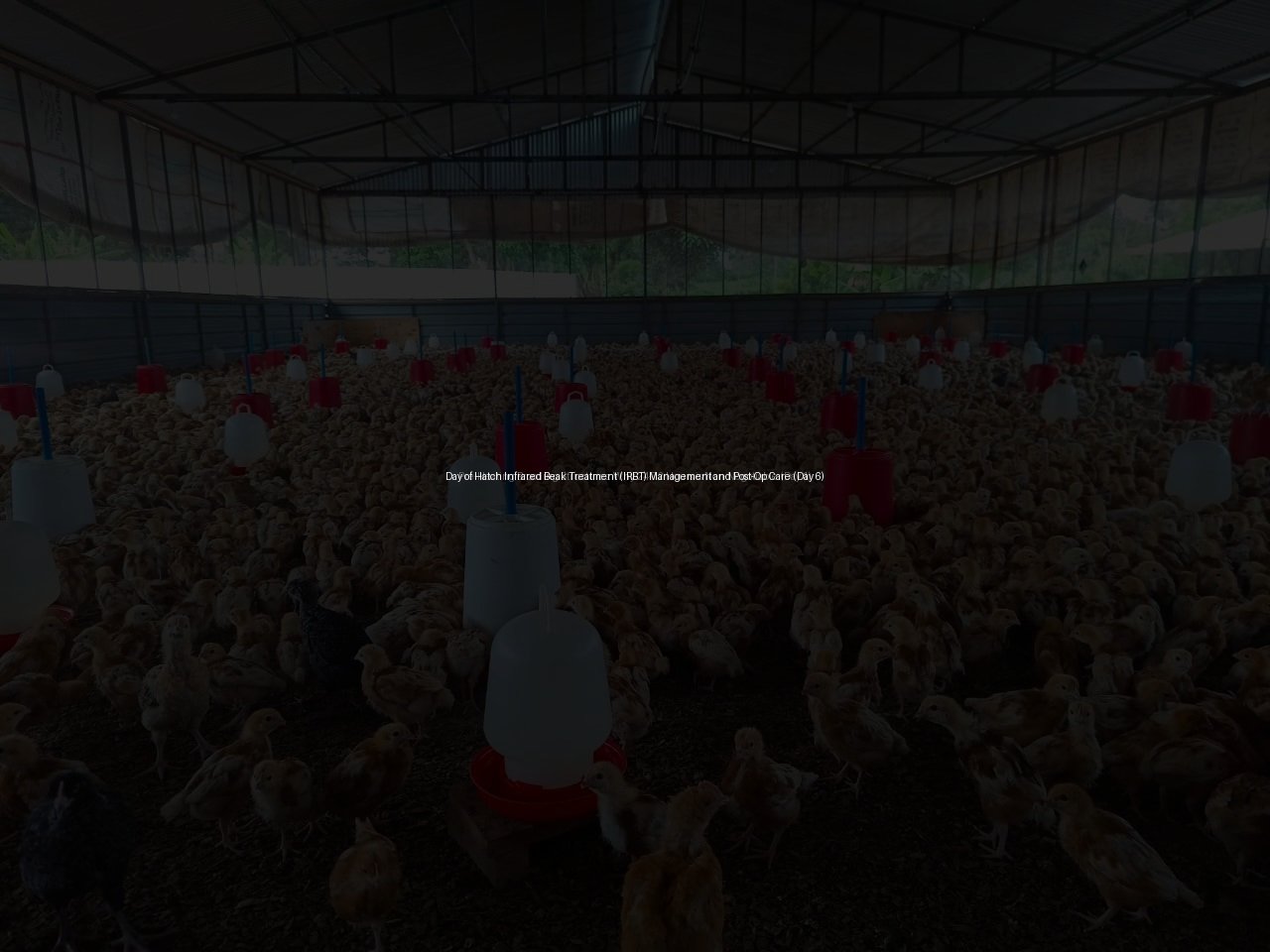
Day six of the production cycle serves as a critical window for verifying the integrity of day-of-hatch infrared beak treatment in Hy-Line Brown progenies. While the thermal exposure occurred within the incubator environment, the biological response and tissue stability are only fully evident once the chicks have established themselves in the brooder. For farm veterinarians and technical managers, this phase transitions from a hatchery-based intervention to an on-farm management confirmation, requiring a shift in focus from machine calibration to individual bird health assessment.
The primary technical imperative at this stage is the execution of a detailed visual inspection checklist spanning the treatment site from day five through day seven. Hy-Line Brown chickens are genetically predisposed to specific growth rates that must align with the thermal keratinization achieved during the infrared exposure. Any deviation in the anticipated tissue response can indicate a mismatch between the intended treatment level and the actual biological outcome, potentially impacting long-term flock uniformity and welfare compliance.
Inspectors must systematically evaluate the upper mandible and lower mandible separation plane for signs of proper keratin formation. A successful treatment presented on day six will exhibit a clean, smooth edge with no excessive swelling, dehiscence, or persistent bleeding. The tissue should appear firm to the touch, lacking the raw, red appearance of immature cartilage or the darkened necrotic tissue associated with over-treatment or early infection.
A critical component of the diagnostic protocol involves assessing the functional integrity of the beak through natural feeding behavior. Technical managers should observe the flock during feeders removal cycles to ensure that the treated beaks maintain sufficient structural strength for effective grain extraction. Hy-Line Brown chicks are typically vigorous eaters in the first week; therefore, any observable hesitation, repetitive pecking without consumption, or vocalization during feeding is a direct indicator of pain or physical impairment at the treatment site.
Feed intake monitoring from day zero through day seven must be integrated with the visual beak assessment to establish a correlation between physical treatment success and early growth performance. Standard targets require that initial feed intake remains consistent with the breed's expected curve, as any drop in consumption immediately following hatch often signals systemic stress exacerbated by local beak discomfort. Data logs should flag any pen where average body weight gain lags behind the herd averages by more than five percent, prompting an immediate re-examination of the beak treatment quality within those specific broods.
Farmers and on-site technical staff should adopt a practical takeaway of daily, systematic sampling rather than waiting for weaning or transfer. A randomized selection of fifty to one hundred chicks per pen, inspected with a magnifying loupe or handheld light, allows for the early detection of outliers that automated surveillance might miss. This hands-on verification ensures that the data reported in management systems reflects the true welfare status of the flock, rather than relying solely on hatchery parameter logs.
Potential complications such as secondary infection or abnormal healing patterns must be recorded with precise anatomical descriptions. If a percentage of the sampled birds show signs of granuloma formation or lateral displacement of the treatment line, this suggests a failure in the thermal gradient during the hatch window. These findings must be documented and communicated back to the hatchery provider, as they may indicate sensor drift or incubator airflow inconsistencies that require recalibration for future batches.
The role of the farm veterinarian at this stage extends beyond observation to the formulation of corrective care protocols if necessary. While routine infrared treatment is non-invasive, compromised cases may require targeted anti-inflammatory support or, in rare instances of significant trauma, manual removal of necrotic tissue. However, interventions should be minimized to avoid increasing the stress load on the young chicks, prioritizing non-pharmaceutical management adjustments such as lighting modification to reduce pecking incidents.
By day seven, the objective is to certify that the beak treatment has stabilized and the flock is transitioning out of the neonatal stress phase into standard brooding growth. The completion of the visual inspection checklist provides the foundational documentation for the flock's lifetime welfare record. Ensuring that every technical manager understands the specific morphological markers of a successful Hy-Line Brown beak treatment is essential for maintaining compliance with international animal welfare standards and optimizing the economic viability of the entire production cycle.
In summary, the day six assessment is not merely a routine check but a strategic validation point that bridges the gap between hatchery technology and on-farm biological reality. By rigorously applying the detailed inspection metrics and correlating them with early feed intake data, technical teams can proactively manage risks associated with beak treatment. This proactive stance ensures that the Hy-Line Brown flock enters the grower phase with optimal physiological condition and consistent performance potential.
Written by The Ekstreme Team
At Ekstreme Poultry Farm, we are dedicated to sharing insights, updates, and educational content to empower poultry farmers across Kenya.
Learn more about us →