Day of Hatch Infrared Beak Treatment (IRBT) Management and Post-Op Care (Day 5)
Ekstreme Team
Ekstreme Poultry Farm
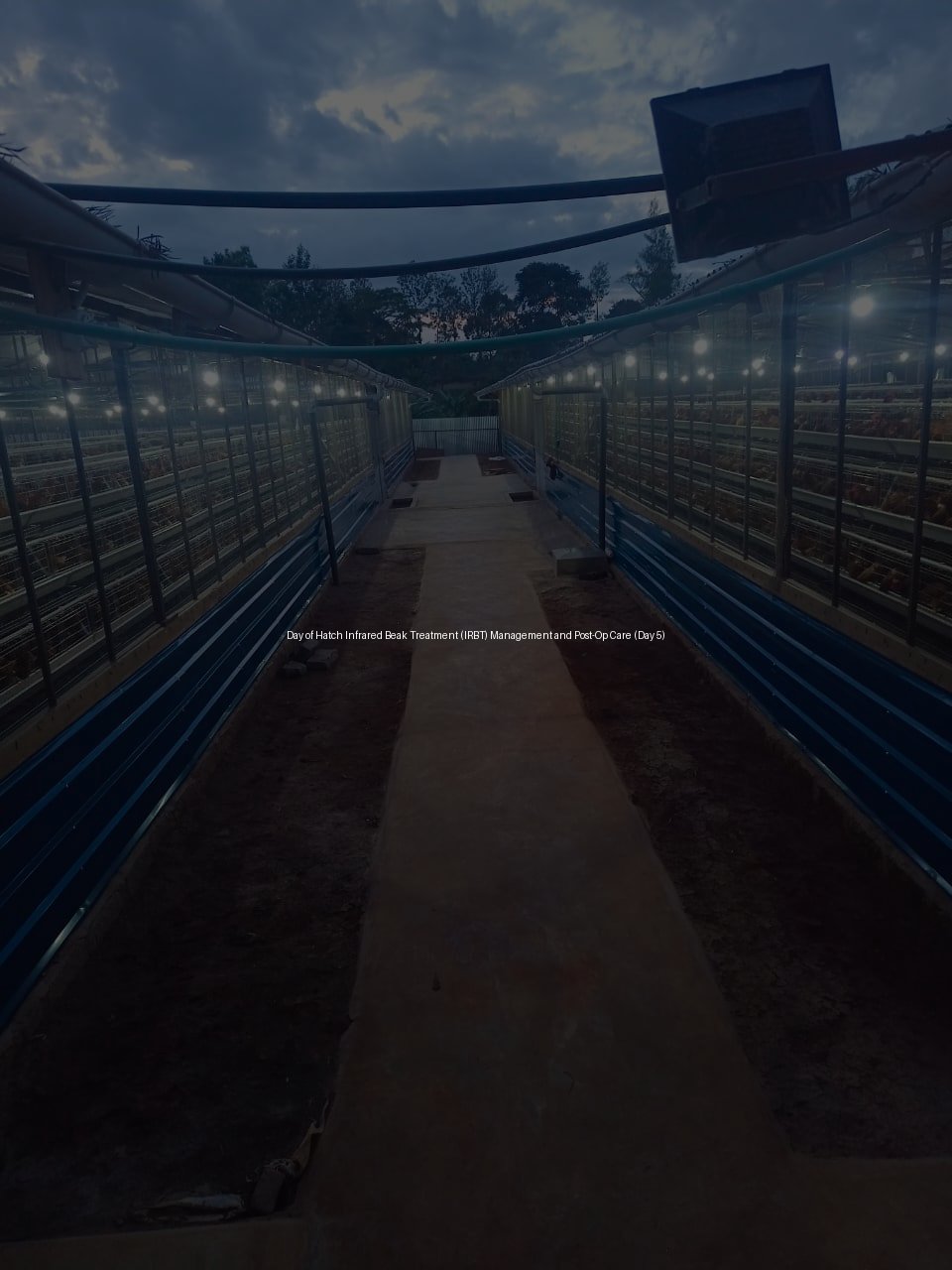
By the fifth day post-hatch, Hy-Line Brown pullets have reached a critical inflection point in their growth trajectory, where the initial success of the day-of-hatch infrared beak treatment truly becomes observable. For farm veterinarians and technical managers, this period serves as a vital diagnostic window to verify that the thermal coagulation achieved during processing has stabilized into a functional, healthy beak structure. Unlike traditional banding methods which carry a higher risk of acute hemorrhagic events in the immediate post-op phase, the infrared method allows for earlier assessment of tissue integrity, making Day 5 an ideal checkpoint before the birds transition to heavier feed intake regimes.
The primary objective for this week is to confirm that the chick's appetite remains unimpeded and that the beak morphology supports efficient pecking. Hy-Line Brown genetics dictate a rapid early growth curve, and any subtle impairment in beak usage during the first week can compound into significant weight variance by the point of lay. Therefore, monitoring feed intake from Day 0 to Day 7 is not merely a routine check but a substantive indicator of the success of the beak treatment. A drop in voluntary feed intake greater than ten percent below the breed standard for the corresponding age and house temperature should immediately trigger a veterinary investigation into potential pain response or structural deformity.
A detailed visual inspection protocol must be executed between Days 5 and 7 to assess the quality of the treatment takes. During this phase, the technician should visually examine both the upper and lower mandibles for signs of improper healing or residual tissue issues. The ideal outcome is a smooth, rounded contour at the beak tip with no excessive overgrowth or underdevelopment. Inspectors must look for evidence of necrotic tissue that was not successfully ablated during the infrared application, which would appear as dark, dry, or flaking material at the beak tip. Additionally, check for any signs of infection such as localized redness, swelling, or purulent discharge at the beak seam, although these are rare with proper infrared parameters.
Specific attention should be paid to the symmetry of the beak after the thermal treatment. Asymmetrical growth can lead to inefficient cropping of feed and subsequent plucking behavior in the flock. During the Day 5 to 7 inspection, measure the beak length relative to the crop size and compare it against the farm's historical baseline for that specific house. If there is a noticeable deviation where a significant percentage of birds exhibit shorter or misaligned beaks, it may indicate that the infrared parameters, such as amplitude or duration, were outside the optimal range for that particular hatch batch or strain variation. Documenting these observations allows for retrospective adjustment of hatchery protocols for future batches.
Beyond the structural integrity of the beak, observe the birds' behavioral response to feeding. Healthy Hy-Line Brown pullets at Day 5 should exhibit active pecking and rapid consumption of starter feed without hesitation. Watch for signs of beak shaking or head bobbing when birds attempt to pick up feed, which can indicate nerve pain or discomfort resulting from incomplete treatment. Additionally, monitor for wing clipping or feather pecking, which may be secondary symptoms of beak discomfort or nutritional imbalance. If a high proportion of birds are observed engaging in abnormal foraging behaviors, a immediate pain assessment and potential medication review is required to mitigate welfare concerns.
Practical farmer takeaways from this phase emphasize the importance of lighting management in conjunction with beak health. By Day 5, the lighting program should align with the recommended photoperiod for Hy-Line Browns to stimulate feed intake. Ensure that the feed lines are accessible and that feeders are clean to prevent the introduction of pathogens to any sensitive beak areas. If any birds are found with severely compromised beaks that prevent them from self-feeding, isolate them immediately for individual care and veterinary intervention. Do not attempt to manually trim or modify the beak, as this can cause further trauma and pain; instead, provide hand-feeding or specialized soft feed for the affected individuals to maintain their growth rate.
Data collection during this diagnostic window is essential for continuous improvement in infrared beak treatment management. Record the percentage of birds requiring secondary treatment or isolation due to beak issues. If the failure rate exceeds one percent, a full review of the hatchery's infrared equipment calibration and operator technique is warranted. Cross-reference this data with hatchery emergence rates and chick quality scores to identify any correlations. This comprehensive approach ensures that the long-term productivity of the Hy-Line Brown flock is protected from the onset of the rearing phase, safeguarding both animal welfare and economic performance.
Finally, establish a clear communication loop between the hatchery technical team and the farm management team. Sharing the specific infrared settings used for the batch, along with the farm's Day 5 to 7 inspection results, creates a feedback loop that refines the treatment protocol. This collaborative effort reduces the variability in beak quality across different flocks and batches. By treating Day 5 as a definitive quality control checkpoint rather than a passive observation period, veterinarians and technical managers can proactively address any deviations from the expected standard, ensuring that the Hy-Line Brown pullets reach the laying phase with optimal beak function and overall health.
Written by The Ekstreme Team
At Ekstreme Poultry Farm, we are dedicated to sharing insights, updates, and educational content to empower poultry farmers across Kenya.
Learn more about us →