Day of Hatch Infrared Beak Treatment (IRBT) Management and Post-Op Care (Day 16)
Ekstreme Team
Ekstreme Poultry Farm
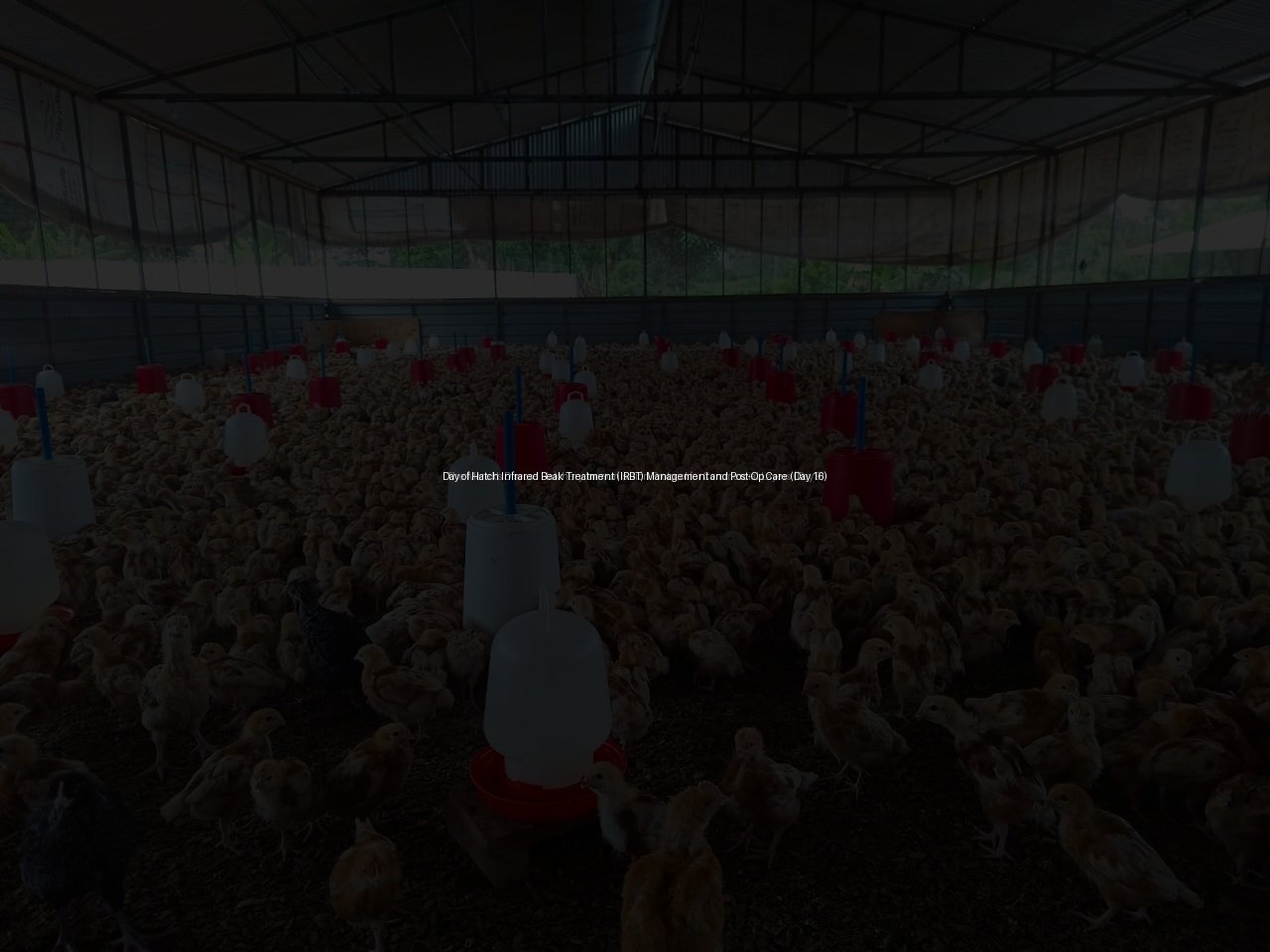
For Hy-Line Brown flocks subjected to Day of Hatch Infrared Beak Treatment, the primary operational focus through Day 16 centers on validating the integrity of the initial hatchery intervention and subsequently transitioning to rigorous on-farm monitoring. While the treatment itself is a single event occurring in the hatchery, the biological response of the beak tissue continues to evolve. Farm veterinarians and technical managers must recognize that the first two weeks are critical for establishing a baseline of health and performance, with specific attention paid to how the treated tissue interacts with feed intake mechanics and respiratory function.
The diagnostic checklist for Day 16 begins with a retrospective review of hatchery records to confirm that the infrared settings aligned with the standard protocol for Hy-Line Brown chicks. Since the treatment cannot be repeated on-farm, any deviations from the standard burn depth or width identified at the hatchery must be documented to correlate with any subsequent performance dips. This initial record-keeping ensures that if abnormal beak regrowth or scarring is observed later, the root cause can be traced back to the initial application parameters rather than on-farm management errors.
By Days 5 to 7, a detailed visual inspection checklist becomes the most critical on-farm intervention step. Technicians should sample at least two hundred chicks per house to assess the healing status of the beak treatment. The inspection should focus on identifying signs of excessive swelling, necrosis, or excessive keratin regrowth that may interfere with the chick's ability to grasp feed. During this window, the beak should appear healed over with a smooth, intact skin flap, free from open wounds or excessive discharge that could indicate secondary infection.
Correlating the physical beak assessment with feed intake data from the first seven days is essential for a complete diagnostic picture. Hy-Line Brown chicks are particularly sensitive to early nutritional stress, and any impact on feed intake following IRBT will manifest as weight loss during this critical period. If feed intake data from Days 0 to 7 shows a variance of more than five percent below the breed target, the visual inspection findings must be scrutinized for potential mechanical obstructions or pain responses that are hindering normal feeding behavior.
Post-Date 16, the management shift moves from acute healing monitoring to long-term growth trajectory analysis. The diagnostic checklist at this stage should include a measurement of beak length relative to body weight to ensure that the treatment has not resulted in a permanent restriction of beak growth that could impact foraging efficiency. Technical managers must verify that the beak angle remains functional for pecking at various feed textures, as improper healing can lead to social discomfort within the flock hierarchy.
Practical farmer takeaways emphasize maintaining high standards of litter quality and ventilation control to mitigate the risk of respiratory complications that can exacerbate beak inflammation. While the beak is not a respiratory organ, systemic inflammation from poor environmental control can delay the healing of the infrared treated tissue. Ensuring that air changes are sufficient to keep ammonia levels below three parts per million is a direct management control that supports overall tissue health during the post-treatment period.
Furthermore, the transition to growing feed at this stage must be synchronized with the observed beak condition. If the visual inspection on Days 5 to 7 revealed slower healing or minor scarring, the introduction of crumbled feed should be delayed or the particle size optimized to reduce the mechanical force required for eating. This adjustment allows the beak to continue healing without the added stress of chewing larger or tougher feed particles, thereby protecting the performance potential of the Hy-Line Brown flock.
Documentation of the Day 16 findings serves as a critical input for the next production cycle. Any deviations in the healing timeline or feed intake recovery should be recorded in the farm log and communicated to the hatchery provider. This feedback loop allows for continuous refinement of the infrared treatment parameters, ensuring that the next batch of chicks receives an optimized treatment that minimizes recovery time and maximizes early growth rates for the Hy-Line Brown breed.
In cases where the beak treatment appears successful but growth curves remain flat, alternative diagnostic causes such as subclinical coccidiosis or Newcastle disease must be ruled out. The diagnostic checklist must remain comprehensive, using the beak condition as one component of a broader health assessment. This holistic approach ensures that management actions are targeted at the actual cause of performance lag, rather than incorrectly attributing issues to the beak treatment alone.
Ultimately, the goal of managing Day of Hatch Infrared Beak Treatment is to achieve a seamless transition from the hatchery to the brooder house without any measureable impact on flock uniformity or health. By adhering to the specific visual inspection checklists and correlating them with hard performance data, technical managers can ensure that the Hy-Line Brown flock reaches its genetic potential for egg production, effectively neutralizing the potential liabilities of the infrared treatment process.
Written by The Ekstreme Team
At Ekstreme Poultry Farm, we are dedicated to sharing insights, updates, and educational content to empower poultry farmers across Kenya.
Learn more about us →