The Marek's Disease Hatchery Immunisation Protocol for Commercial Layers (Day 9)
Ekstreme Team
Ekstreme Poultry Farm
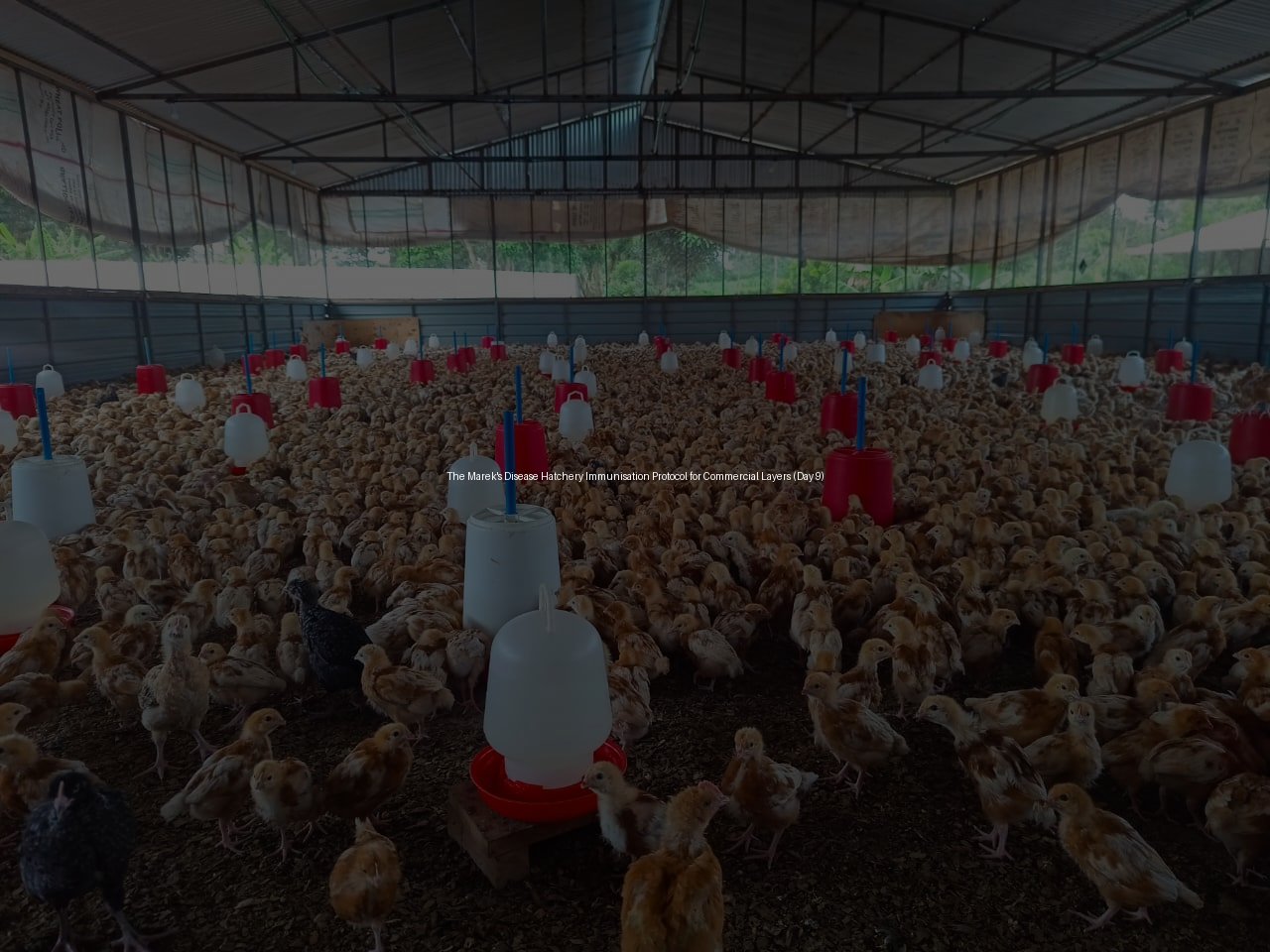
Marek's disease remains a critical threat to commercial poultry operations, particularly for high-performance breeds such as Hy-Line Brown layers. This viral condition, caused by gallid herpesvirus 2, can lead to devastating losses in immunity and production if not addressed at the earliest stage of a bird's life. For commercial producers targeting maximum egg output, adhering to a rigorous hatchery immunization protocol is not merely a recommendation but a fundamental requirement for flock health and economic viability. The Day 9 standard target mandates that one hundred percent of day-old chicks receive subcutaneous vaccination at the hatchery stage to ensure optimal protection throughout the laying cycle.
The selection of the vaccine strain is a pivotal technical decision in managing Marek's disease risk. The Rispens HVT strain is widely recognized as the preferred choice for Hy-Line Brown flocks due to its superior efficacy in providing robust immunity against heterologous challenges from highly virulent field strains. This specific strain offers a balanced approach to protection without inducing excessive tumor formation, which is a known side effect in some other vaccine types. Utilizing the Rispens HVT ensures that the birds develop a strong cellular immune response that can withstand the high-density housing conditions typical of commercial layer houses.
Technical implementation of the vaccination process requires strict adherence to dilution rules to maintain vaccine potency. The vaccine vial must be reconstituted with the supplied diluent immediately before use, and it is critical to avoid exposing the reconstituted vaccine to temperatures above two to eight degrees Celsius for more than the manufacturer's specified window. Any deviation from these cold chain parameters can result in the inactivation of the viral particles, rendering the vaccine ineffective. Producers must verify that the hatchery holds a valid certificate of cold chain integrity for the specific batch being administered to the chicks.
Administration of the vaccine is performed via single subcutaneous injection into the wing web of the day-old chick. This method is chosen for its ability to deliver the vaccine directly into the tissue where the immune response is most effectively initiated. The needle gauge and depth must be strictly controlled to prevent intramuscular or intradermal injection, which can lead to reduced immunogenicity and potential tissue damage. Automated application systems in modern hatcheries are calibrated to deliver precise volumes, typically between 0.2 and 0.5 milliliters, ensuring that each chick receives the full therapeutic dose required for protection.
Maintaining a clean cold chain is arguably the most critical logistical aspect of the hatchery protocol. From the point of storage at the supplier to the moment of injection, the vaccine must remain within the designated temperature range. Humidity levels must also be monitored to prevent condensation inside the vaccine vials, which can alter the concentration of the active ingredient. Hatchery staff are required to log temperature readings at regular intervals, and any excursion outside the safe range must trigger an immediate quality hold on the corresponding batch of chicks until veterinary approval is granted.
A significant portion of vaccination failures in commercial operations stems from operator error during the day-old chick handling process. It is imperative that hatchery personnel undergo regular training to recognize and correct injection site errors and to monitor equipment calibration. The flow of the day-old chicks through the vaccination line must be maintained at a steady, controlled speed to ensure that each bird is adequately restrained and positioned for accurate needle placement. Overcrowding or noisy environments can cause stress in the chicks, leading to erratic movement and increased rates of missed or improper injections.
Upon arrival at the brooding facility, producers should document the vaccination status of each pen in their flock records. While the hatchery provides a stamp or mark on each chick's wing, the farm manager should verify a sample of the birds to ensure compliance with the one hundred percent coverage target. This verification step serves as a final quality check and creates a traceable record for future veterinary audits. Any discrepancies in marking or physical signs of poor injection technique should be reported back to the hatchery for review and corrective action.
The practical takeaway for commercial egg producers is that hatchery immunization is the foundation of a stable Marek's disease control program. Relying on later reinforcing vaccinations is a high-risk strategy that does not compensate for missed or ineffective day-old vaccinations. By ensuring that the Rispens HVT strain is correctly administered under strict cold chain protocols in the hatchery, producers secure the first line of defense for their Hy-Line Brown flocks. This proactive approach minimizes the risk of clinical disease, stabilizes the immune system, and supports the full expression of the breed's genetic potential for egg production.
Finally, continuous monitoring of flock performance for signs of paralysis or tumor formation remains essential, even with a successful hatchery vaccination program. Young birds may still exhibit mild reactions to the vaccine, such as transient paralysis in hindlimbs, which is a known and usually temporary side effect of live Marek's vaccines. Understanding this normal physiological response prevents unnecessary panic and allows for proper management of affected birds. By integrating rigorous hatchery protocols with attentive on-farm monitoring, commercial producers can achieve consistent flock health and maximize return on investment throughout the entire laying period.
Written by The Ekstreme Team
At Ekstreme Poultry Farm, we are dedicated to sharing insights, updates, and educational content to empower poultry farmers across Kenya.
Learn more about us →