
The Marek's Disease Hatchery Immunisation Protocol for Commercial Layers (Day 8)
Ekstreme Team
Ekstreme Poultry Farm
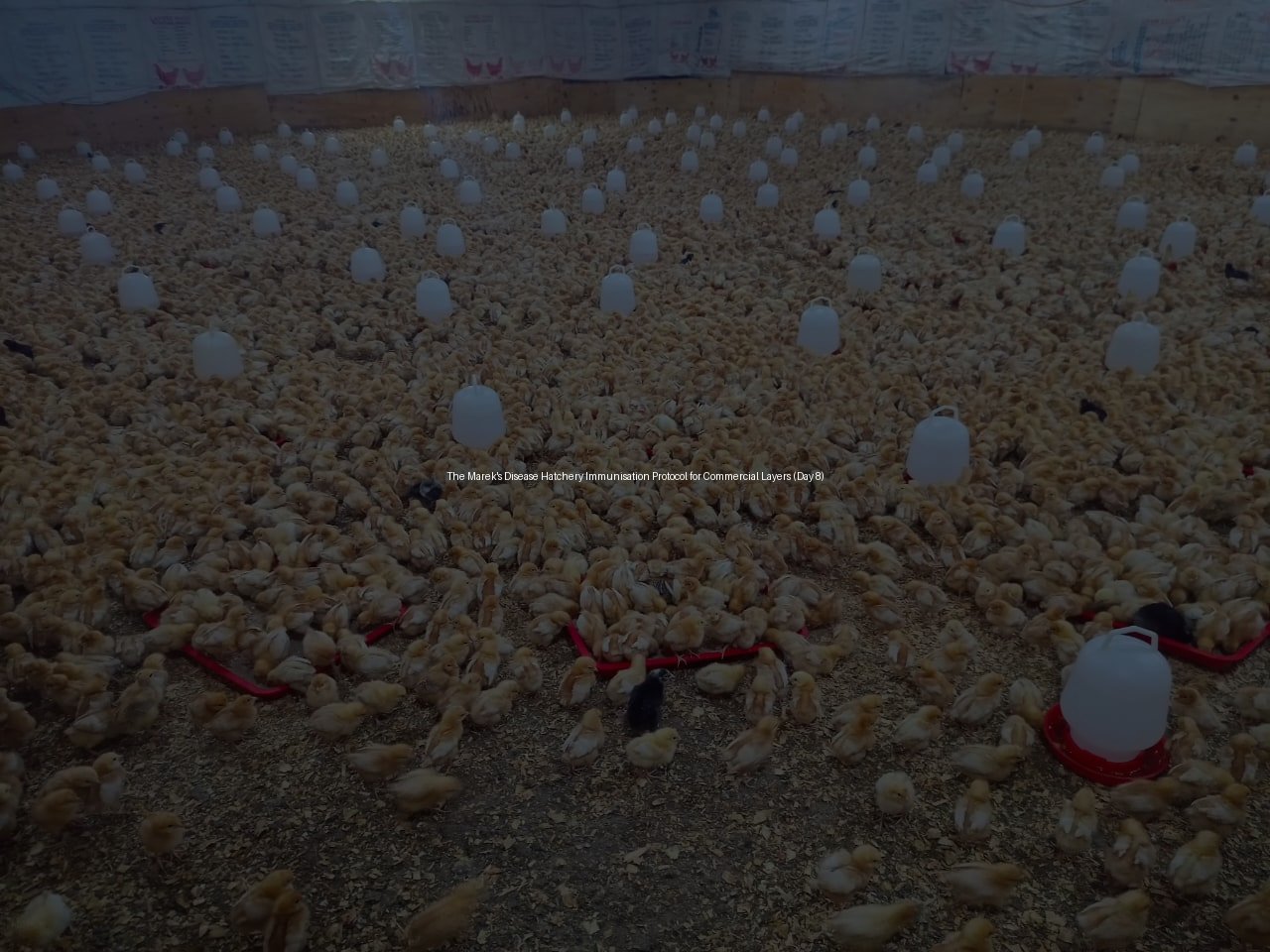
commercial Hy-Line Brown operations depend heavily on the absolute integrity of the initial Marek's disease immunization window to ensure flock uniformity and long-term production stability. The critical milestone occurs on Day 8, where the industry standard demands that one hundred percent of day-old chicks receive a subcutaneous injection of a live vaccine strain, with Rispens or HVT formulations being the preferred choices for their proven efficacy in preventing lymphomatous tumors and paralysis. This early intervention is not merely a routine check but a foundational biosecurity measure that dictates the health and economic viability of the entire laying phase.
The technical implementation begins with rigorous preparation of the vaccine vial by the hatchery technician. The lyophilized powder must be reconstituted with the specific sterile diluent provided by the manufacturer, ensuring that the vaccine reaches its optimal potency before administration. It is imperative that the dilution process is performed in a clean, controlled environment to prevent any potential contamination that could reduce the vaccine's effectiveness or introduce secondary pathogens into the susceptible chicks. The consistency of the dilution directly correlates with the reliability of the immune response in the subsequent weeks of growth.
A stringent clean cold chain maintenance protocol is the backbone of successful vaccine delivery. From the moment the vaccine is removed from its cold storage until it is injected into the chick, it must remain within a specific temperature range to ensure the viability of the live viral particles. Any deviation from these thermal parameters, even for a short period, can lead to a significant drop in vaccine titer, resulting in partial or complete immunization failure. Hatchery staff must monitor thermometer logs continuously and use validated cold packs or insulated trays to maintain the required temperature during the vaccination line.
The subcutaneous injection technique requires precision to achieve uniform vaccine distribution without causing unnecessary tissue damage. The needle must penetrate the skin and deliver the full volume of the vaccine into the loose connective tissue of the wing web or the back of the neck, avoiding direct muscle entry or subcutaneous pooling. Proper grip and injection speed are essential to minimize stress and movement, which can lead to missed doses or inaccurate placement in the fast-moving flock stream of a commercial hatchery. Technicians should regularly test their injection points with a fine brush or visual check to ensure the entire vial volume is delivered to each bird.
Quality assurance checks are integrated throughout the vaccination process to verify that the one hundred percent target is met. This involves counting vaccinated chicks against the total batch number and spot-checking the injection sites of random samples to confirm proper uptake. Any chick found to be unvaccinated or showing signs of improper injection must be immediately set aside for individual re-vaccination or destruction, depending on the farm's biosecurity policy. This strict enforcement ensures that no poorly immunized birds enter the grow-out phase, where they could become susceptible to field strains of Marek's disease virus.
Practical guidance for commercial producers emphasizes the value of auditing the hatchery's records upon chick arrival. Producers should request detailed vaccination certificates that specify the vaccine strain, batch number, dilution date, and quality control results. Understanding the specific Rispens or HVT variant used allows the producer to anticipate the timeline for optimal immunity and to schedule any subsequent in-flock booster strategies appropriately. This transparency fosters a partnership between the hatchery and the producer, ensuring shared responsibility for flock health.
The long-term implications of a robust Day 8 immunization protocol are evident in reduced mortality rates and improved feed conversion ratios during the critical growth period. Flocks that receive a high-quality, uniformly administered Marek's vaccine exhibit lower stress levels and better resilience against other concurrent infections. By prioritizing this initial step, producers can avoid the costly consequences of mid-flock outbreaks, which often result in significant economic losses and potential slaughter of the entire batch.
Conclusion underscores that the success of the Hy-Line Brown layer flock is built on the precision of its early immunization protocols. Maintaining the one hundred percent vaccination rate through meticulous cold chain management, accurate subcutaneous technique, and rigorous quality control is essential for modern commercial poultry production. Adhering to these standards ensures that the genetic potential of the breed is fully realized in a healthy and productive environment.
Written by The Ekstreme Team
At Ekstreme Poultry Farm, we are dedicated to sharing insights, updates, and educational content to empower poultry farmers across Kenya.
Learn more about us →