The Marek's Disease Hatchery Immunisation Protocol for Commercial Layers (Day 7)
Ekstreme Team
Ekstreme Poultry Farm
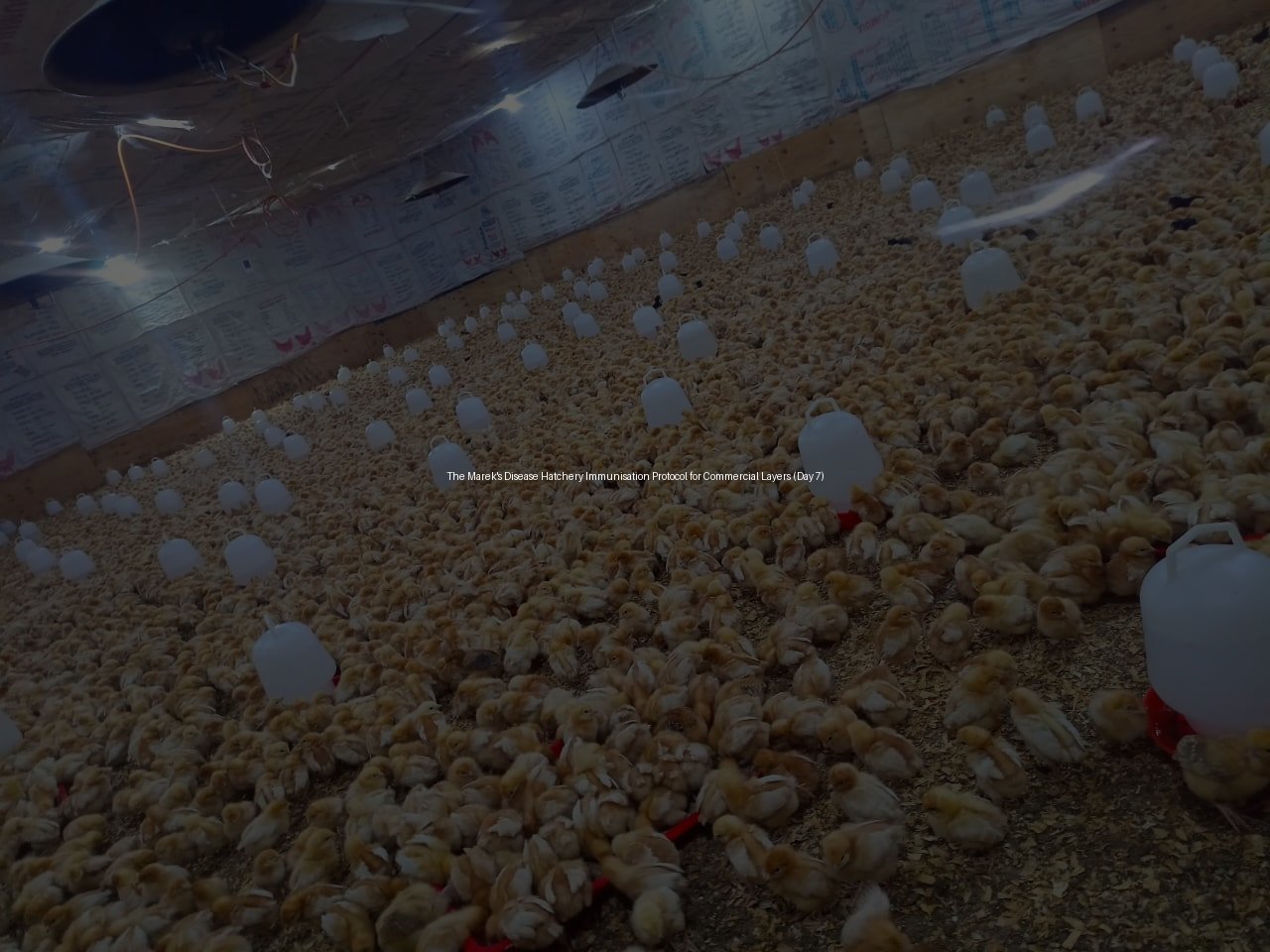
The Hy-Line Brown hybrid represents the industry standard for commercial layer production, prized for its robust egg production curve and exceptional feed conversion efficiency. However, this genetic robustness is often challenged by systemic viral threats, specifically Avian Infectious Bursal Disease and Marek's Disease. To maintain the anticipated longevity of twenty-four to twenty-six weeks of peak production, hatchery-based immunization is not merely a recommendation but a non-negotiable foundational protocol. The primary objective of this intervention is to establish immediate, high-titer immunity in the youngest and most vulnerable stage of the flock's life, ensuring that the foundational health architecture is in place before the birds transition to grower houses.
Marek's Disease, caused by a herpesvirus, poses a severe threat to high-density layer populations, manifesting as lymphomatous tumours in peripheral nerves and organs. In commercial Hy-Line Brown rearing, the virus can spread rapidly through aerosols and contaminated equipment, leading to significant culls and electrical nerve damage that results in twisted necks or limb paralysis. By targeting day-old chicks at the hatchery, producers can bypass the immunosuppression window that typically occurs in the first few days of life, thereby neutralizing the virus before it has the opportunity to establish a latent infection in the feline immune system. This preemptive strike is critical for maintaining uniformity and minimizing the genetic potential loss associated with early mortality.
The standard operating procedure mandates that one hundred percent of Hy-Line Brown day-old chicks must receive the selected Marek's vaccine via subcutaneous injection in the neck area during the hatchery inventory process. This 100% coverage metric is the cornerstone of the protocol because even a small percentage of unvaccinated birds creates a reservoir for viral transmission, compromising the overall herd immunity. The choice of vaccine, typically a combination of Rispens and HVT strains, is dictated by these strict requirements, as these specific attenuated vectors provide the most durable protection against the diverse field strains of the virus currently circulating in commercial environments around the world.
The technical implementation of the vaccination process requires a rigorous understanding of dilution rules and vaccine stability. The lyophilized vaccine must be reconstituted with a specified medium, often containing antibiotics to reduce bacterial load from the equipment, and mixed thoroughly to ensure a homogeneous suspension. The validity window for this mixture is strictly limited, requiring complete administration within thirty minutes of reconstitution to guarantee the viability of the attenuated viral particles. Any delay beyond this timeframe results in viral die-off, rendering the shot ineffective and creating a false sense of security that can be disastrous during the subsequent grow-out phase.
Maintaining the cold chain is equally critical to the success of the immunisation protocol, as Marek's vaccines are temperature-sensitive biological agents. The vaccine must be stored at two to eight degrees Celsius from the point of arrival at the hatchery until the exact moment of reconstitution. Exposure to temperatures above ten degrees Celsius, even for a brief period, can compromise the immunogenicity of the vector, leading to a sub-therapeutic response. Specialized insulated boxes with phase-change materials must be used for transport between storage and the vaccination line, and the temperature log must be documented for every batch to ensure regulatory compliance and traceability in case of subsequent health incidents.
The injection technique employed by hatchery personnel must be precise and standardized to ensure both safety and efficacy. The needle is typically a small gauge, and the injection is delivered into the loose subcutaneous tissue of the back of the neck, a site chosen to facilitate excellent absorption while avoiding accidental intramuscular delivery that could cause necrosis. Operators must follow a strict aseptic procedure, changing the needle at regular intervals to prevent dullness and minimize the risk of introducing secondary bacterial infections such as yeast or Aspergillus, which can mimic early Marek's symptoms and complicate the diagnostic picture.
Post-hatchery monitoring involves verifying the efficacy of the immunisation through sampling protocols in the house. While immediate serology is not always practical, physical inspections in the first week are essential to detect any signs of vaccine reaction or injection site abscesses. Producers should coordinate with their hatchery to receive a certificate of vaccination confirming that the specific lot of offspring has been fully treated. If any discrepancies are noted in chick quality or high early mortality rates are observed, a detailed post-mortem investigation is required to differentiate between vaccine-related stress and genuine viral breakthrough.
For the commercial egg producer, the practical takeaway is that the hatchery immunisation protocol serves as the primary shield for the Hy-Line Brown production cycle. Adhering to the 100% coverage benchmark ensures that the genetic investment in high-performing pullets is protected from preventable systemic failures. By maintaining a disciplined cold chain and ensuring that the Rispens and HVT combination is administered correctly at the hatchery, producers lay the groundwork for a uniform, healthy, and productive flock that can achieve its maximum economic potential. This proactive approach transforms a biological risk into a managed technical process, ultimately securing the profitability of the entire layer operation from hatch to final production.
Written by The Ekstreme Team
At Ekstreme Poultry Farm, we are dedicated to sharing insights, updates, and educational content to empower poultry farmers across Kenya.
Learn more about us →