The Marek's Disease Hatchery Immunisation Protocol for Commercial Layers (Day 6)
Ekstreme Team
Ekstreme Poultry Farm
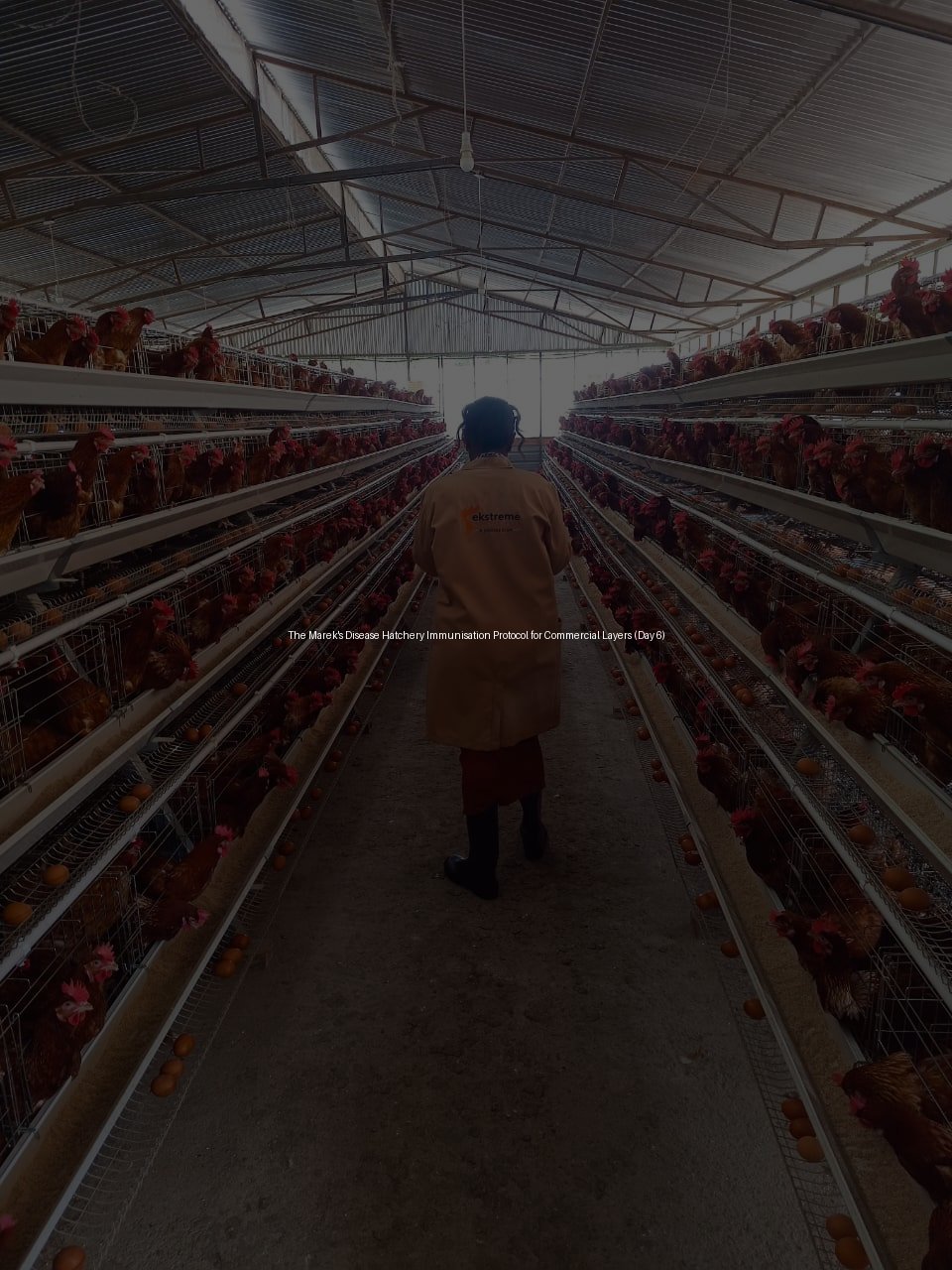
Marek's disease remains one of the most significant economic threats to modern poultry production, necessitating rigorous prophylactic measures from the moment of hatching. For commercial Hy-Line Brown layers, which are prized for their high egg production efficiency, maintaining robust immunity against this alphavirus is critical to preventing respiratory distress and mortality in the breeder and commercial flocks. The hatchery stage represents the most efficient and effective window for establishing this immunological baseline, making the protocol at Day 6 a cornerstone of biosecurity and flock health management for producers.
The standard operational target for commercial enterprises is that one hundred percent of day-old chicks must receive the Marek's vaccine subcutaneously within the hatchery environment. This administration is typically performed before the chicks are crated for transport to avoid the stress and physical constraints associated with on-farm vaccination of thousands of birds. Achieving this full coverage rate is not merely a recommendation but a critical quality control metric that ensures uniform immunity across the entire replacement flock, which directly impacts the long-term productivity and consistency of the Hy-Line Brown production cycle.
The selection of vaccine brands, preferentially HVT or Rispens, involves specific biological considerations tailored to the genetic makeup of the Hy-Line Brown breed. These live, recombinant vaccines provide protection against the field strains of Marek's disease while also reducing the virulence of challenge attacks. The decision to use these specific strains is based on decades of epidemiological data showing their superior efficacy in broiler breeder and layer flocks, offering a reliable shield that complements the genetic resistance present in the selected Hy-Line stock.
Technical implementation begins with the strict preparation of the vaccine diluent, which must be performed immediately prior to use to ensure maximum viral viability. The dilution ratio is typically one part vaccine to one part sterile phosphate buffered saline or the manufacturer's specific saline, and the mixture must be handled with aseptic technique in a temperature-controlled environment. Any deviation from the prescribed dilution volume can result in sub-therapeutic dosing, which risks vaccine failure and the subsequent outbreak of Marek's in sensitive age groups.
Maintaining an unbroken cold chain is the single most vital logistical component of this protocol. The vaccine must be stored at two to eight degrees Celsius from the point of departure at the laboratory until the moment of administration. In the hatchery, the dilution and injection process should occur within a cold room or a climate-controlled area where the ambient temperature does not exceed twenty-five degrees Celsius. Exposing the vaccine to warmer temperatures for even a few minutes can significantly reduce viral titers, leading to inadequate immune response in the chicks.
The administration technique requires the use of fine-gauge hypodermic needles, typically sixteen to eighteen gauge, to ensure accurate subcutaneous injection into the neck or wing area. Operators must be trained to insert the needle at a shallow angle to avoid hitting the muscular layer or causing tissue trauma, which can lead to local lesions that compromise the bird's appearance and skin integrity. A dual-operator system where one person holds the chick and the other injects can help maintain the high throughput necessary to meet the two-hour administration window while ensuring each bird receives the correct dose.
Quality assurance within the hatchery involves continuous monitoring of the vaccine mixing process and the performance of the injection equipment. Throstle adjustments on the vacuum injector must be calibrated daily to prevent needle drift, which can cause inaccurate dosing or missed injections. Furthermore, the physical condition of the chicks is assessed during the handling process; any bird showing signs of congenital defects or severe dehydration should be identified and handled separately, as their physiological state may impact vaccine uptake and retention.
For the commercial producer, the practical takeaway is that verifying the hatchery's compliance with this protocol is an essential step before accepting any shipment of Hy-Line Brown chicks. Producers should request the hatchery's vaccination records and cold chain logs to confirm that the hundred percent target was met and that the vaccine was handled according to specifications. This due diligence protects the producer's investment by ensuring that the incoming chicks have a standardized level of immunity, reducing the risk of early mortality and performance variation in the rearing shed.
Effective coordination between the hatchery and the farm is also crucial for the success of the Day 6 protocol. Transport conditions must be managed to minimize heat stress, as elevated temperatures during transit can further degrade the vaccine's efficacy if the cold chain was previously compromised. The arrival of chicks should be scheduled to allow for immediate acclimatization to the brooding environment, where they will continue to build their immune systems throughout the pre-lay period, relying on the foundation laid by the hatchery immunization.
In conclusion, the hatchery immunization protocol for Marek's disease is a critical technical intervention that ensures the economic viability of Hy-Line Brown layer production. By adhering to strict guidelines regarding vaccine selection, dilution, cold chain maintenance, and injection technique, hatcheries and producers can mitigate one of the most costly risks in poultry farming. This proactive approach not only safeguards the health of the individual birds but also supports the stability and efficiency of the entire commercial egg supply chain.
Written by The Ekstreme Team
At Ekstreme Poultry Farm, we are dedicated to sharing insights, updates, and educational content to empower poultry farmers across Kenya.
Learn more about us →