The Marek's Disease Hatchery Immunisation Protocol for Commercial Layers (Day 13)
Ekstreme Team
Ekstreme Poultry Farm
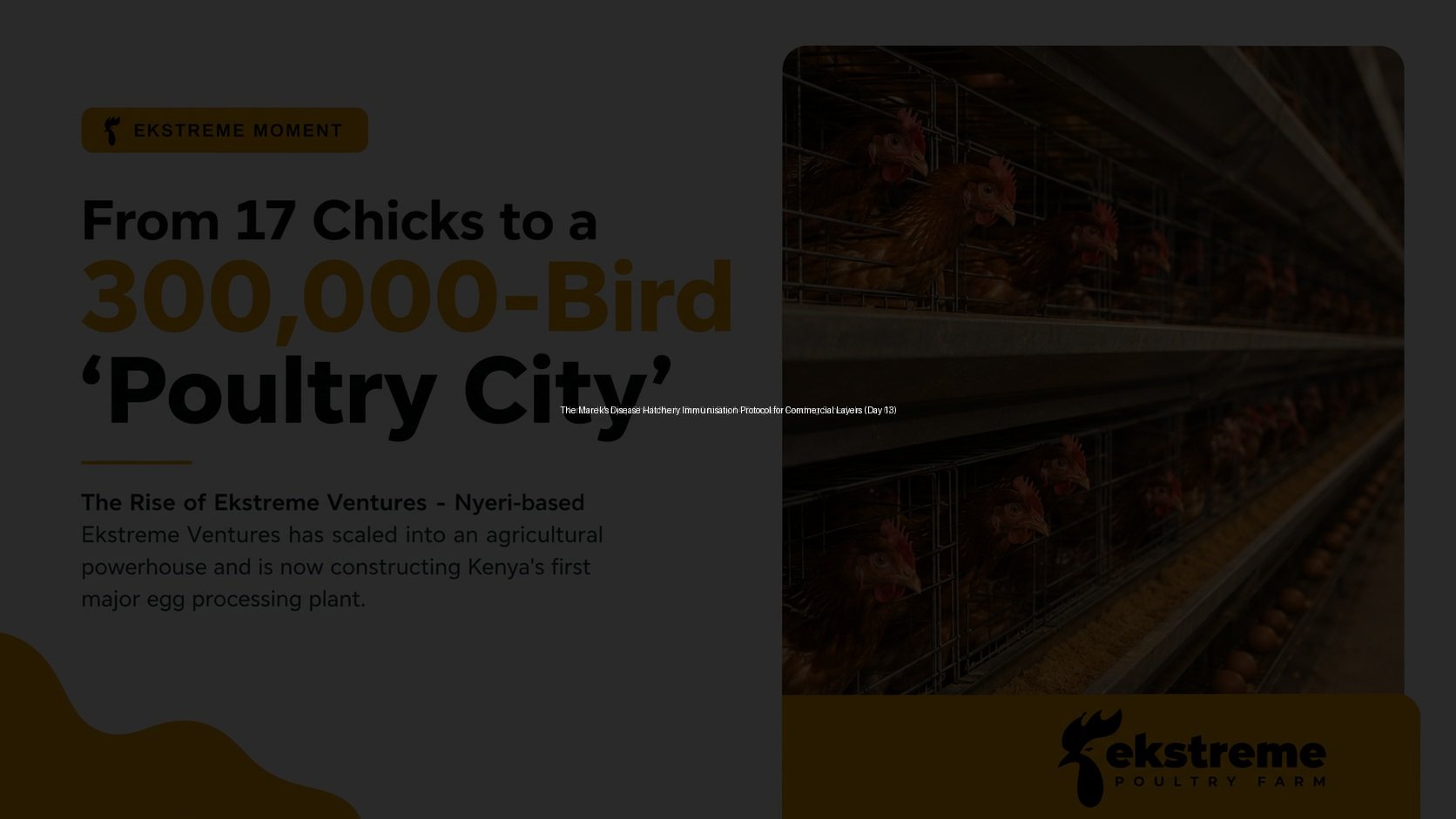
The onboarding of Hy-Line Brown chicks into the brooding environment begins with a critical immunological step that dictates the long-term health of the layer flock. While the breed is renowned for its exceptional egg production potential and hardiness, its performance is only realized if the chicks are protected against Marek's disease early in life. This protection is not optional but a fundamental requirement for commercial success, as the virus can cause severe mortality and welfare issues if not addressed immediately upon hatching.
The primary technical objective for Day 13 of the hatchery cycle is to ensure that one hundred percent of day-old chicks receive the Marek's disease vaccine subcutaneously. For Hy-Line Brown lines, the preferred vaccines are Rispens or HVT, which offer broad-spectrum protection against both serotypes of the virus. The goal is absolute coverage, meaning zero unvaccinated birds should leave the hatchery, as any unvaccinated individual significantly compromises the overall health security of the flock they will ultimately join.
Technical implementation begins with the precise handling of the vaccine product, requiring strict adherence to dilution rules provided by the manufacturer. The vaccine must be reconstituted using the supplied diluent or clean water, and it must be used within a specific time frame, typically within four to six hours, to ensure maximum efficacy. Any deviation from these retention times can result in reduced antibody titers, leaving chicks vulnerable to infection despite appearing to have been vaccinated.
Maintaining an unbroken cold chain is equally critical to the success of the immunization protocol. From the point of arrival at the hatchery until the moment the vaccine is administered, the product must be stored at temperatures between two and eight degrees Celsius. Failure to monitor the temperature logs or to keep the vaccine shielded from direct sunlight can lead to thermal degradation of the viral vectors, rendering the immunization ineffective and necessitating costly re-vaccination programs later in the production cycle.
The administration technique dictates the actual availability of the vaccine to the chick's immune system, making the subcutaneous route in the wing or neck area the standard of care. Injectors must be calibrated regularly to ensure accurate dosing, and needle sharpness must be monitored to minimize tissue trauma and the risk of spreading other bacterial infections. A skilled vaccinator should aim for a uniform injection depth to ensure the virus is deposited in the subcutaneous tissue, where it can effectively stimulate the desired immune response.
Sanitation of the immunization line is a proactive measure that prevents cross-contamination between broods of different genetic backgrounds or arrival times. All injector blocks, trays, and handling equipment must be cleaned and disinfected between each batch of chicks to prevent the mechanical transfer of pathogens. This biosecurity step is particularly important in high-density hatching scenarios where the proximity of different flocks increases the risk of accidental cross-infection.
Quality control of the vaccination process should be documented through rigorous record-keeping and periodic audits of the injection line. Supervisors should verify that the flow rate of the injectors is consistent and that all chick batches are processed without gaps in the scanning or counting systems. These internal checks provide a verifiable trail that confirms the one hundred percent coverage target has been met, giving the commercial producer confidence in the immunization status of their stock.
Practical takeaway for the farmer: Upon arrival of the chicks, the producer should verify the hatchery's vaccination certificate and confirm that the specific strain of Marek's vaccine used matches the recommended protocol for Hy-Line Brown layers. Ensuring that the documentation aligns with the physical condition of the birds, such as checking for any visible distress or high mortality rates in the arrival checks, provides an early indicator of whether the immunization process was successful. Close collaboration with the hatchery and adherence to the post-hatch nutrition plan will support the development of a robust immune system in the chicks.
Ultimately, the day thirteen protocol represents a foundational investment in the economic viability of the layer operation. By adhering to the strict guidelines for vaccine selection, dilution, cold chain integrity, and precise administration, the hatchery ensures that every Hy-Line Brown chick enters the brooding phase with a strong immune defense against Marek's disease. This level of diligence minimizes the risk of future outbreaks, supports consistent growth, and guarantees that the birds reach peak production with minimal health interruptions.
Written by The Ekstreme Team
At Ekstreme Poultry Farm, we are dedicated to sharing insights, updates, and educational content to empower poultry farmers across Kenya.
Learn more about us →