The Marek's Disease Hatchery Immunisation Protocol for Commercial Layers (Day 12)
Ekstreme Team
Ekstreme Poultry Farm
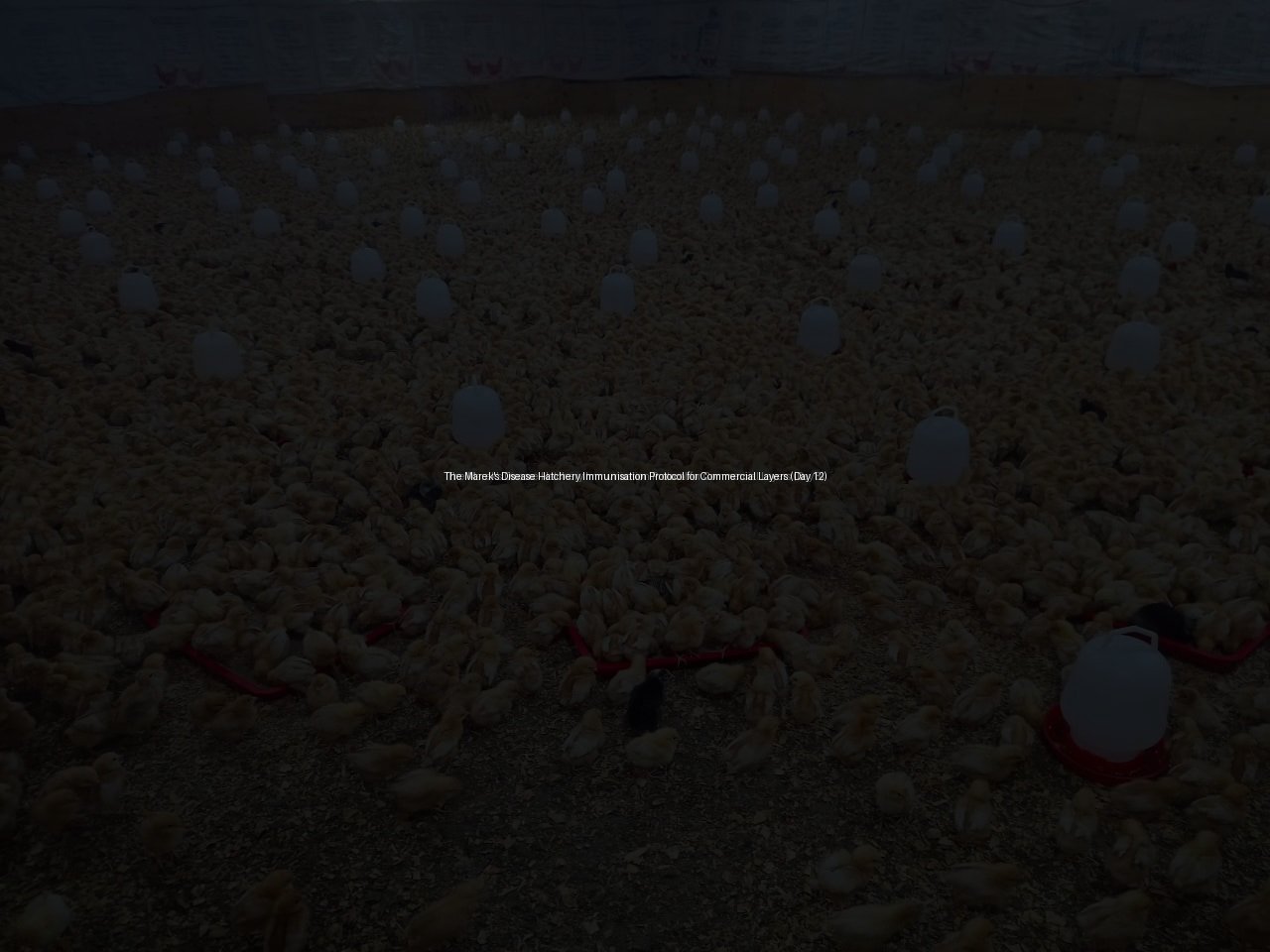
The successful production of high-yielding laying flocks is fundamentally dependent on establishing robust immunity against Marek's Disease at the earliest possible stage of life. For commercial operations utilizing Hy-Line Brown genetics, the integrity of this initial immune response directly correlates with flock uniformity, feed conversion efficiency, and overall laying performance throughout the production cycle. The hatchery environment serves as the primary site for this critical intervention, where precise timing and proper technique are non-negotiable factors in ensuring that the young birds develop adequate protection before potential field exposure to the pathogen.
Marek's Disease is caused by a highly contagious alphaherpesvirus that can lead to severe neurological and visceral manifestations in susceptible poultry. In the context of Hy-Line Brown layers, which are bred for high productivity and late maturity, the stress of transport and early rearing environments can compromise natural immune defenses if specific protection is not in place. The virus replicates rapidly in the absence of acquired immunity, often resulting in lymphomata or paralysis that significantly impacts culling rates and economic viability before the birds even reach the brooding facility.
The standard operational target for any commercial hatchery supplying Hy-Line Brown chicks is to achieve one hundred percent vaccination coverage with a live attenuated Marek's Disease vaccine. While various viral stocks such as Rispens and HVT are in circulation, the selection of the specific strain should align with regional veterinary recommendations and the prevailing serotype challenges in the local area. It is essential that every single chick handles the full dose required to stimulate an adequate antibody response, as partial vaccination or missed doses create vulnerable subpopulations within the flock that can serve as reservoirs for vertical or horizontal spread.
Administrative and logistical controls must be strictly enforced to ensure that the vaccine remains viable from storage through to the moment of injection. The cold chain must be maintained unbroken, with vaccines stored between two and eight degrees Celsius to prevent protein denaturation and loss of potency. Any vial that has been exposed to temperatures above these limits must be immediately discarded and recorded as a quality control failure, as the administration of an inactivated vaccine offers no protective benefit and may even induce ineffective immune tolerance in the young birds.
Before administration begins, the vaccine must be reconstituted according to the manufacturer’s specific dilution rules, typically using a cold diluent to maintain the stability of the live attenuated virus. The dilutant and the vaccine itself should be allowed to reach the same temperature prior to mixing to minimize thermal shock to the viral particles. Mixing should be performed gently but thoroughly to achieve a uniform suspension without creating excessive foam, which can compromise the sterility of the process and the accuracy of the volume drawn into the syringe.
The physical administration of the vaccine is performed via subcutaneous injection in the wing web, a location that allows for easy visualization of needle placement and minimizes tissue trauma to the developing chick. Operators must be trained to handle the chicks with firm but gentle support, ensuring that the needle penetrates the dermis sufficiently to deposit the dose into the subcutaneous space rather than intramuscularly or intradermally. Sterile, single-use needles are mandatory to prevent mechanical transmission of other pathogens and to ensure that the tip remains sharp enough to deliver the full volume of the vaccine without significant leakage.
Cold chain maintenance is not a static condition but an active process that requires continuous monitoring throughout the vaccination procedure. Ice packs or refrigerated containers should be used to keep the vaccine and diluent at the optimal temperature range during the actual inoculation process, particularly in warmer hatchery environments or during high-volume processing shifts. Thermometer probes should be checked at regular intervals, and any deviation from the target temperature range must trigger an immediate halt to the vaccination line to assess the integrity of the remaining vaccine supply.
For the commercial egg and meat producer, the primary takeaway is that the hatchery immunization protocol is a shared responsibility involving strict verification of documentation. Producers should request and review the hatchery records confirming that one hundred percent of the chicks in a specific batch or delivery were vaccinated against Marek's Disease using an approved strain such as Rispens or HVT. This documentation serves as the baseline for future serological testing and is critical for diagnosing any subsequent drop in production or increase in culls that might indicate vaccine failure or field challenge.
Ultimately, adherence to the Day 12 hatchery immunization protocol ensures that the Hy-Line Brown flock enters the rearing phase with a solid immunological foundation. By prioritizing complete coverage, strict cold chain management, and precise subcutaneous technique, both the hatchery and the farm operator mitigate the primary risks associated with Marek's Disease. This proactive approach safeguards the investment in high-quality genetics and supports the long-term sustainability of the commercial laying operation by preventing the costly epizootics that plague unprotected flocks.
Written by The Ekstreme Team
At Ekstreme Poultry Farm, we are dedicated to sharing insights, updates, and educational content to empower poultry farmers across Kenya.
Learn more about us →