
The Marek's Disease Hatchery Immunisation Protocol for Commercial Layers (Day 11)
Ekstreme Team
Ekstreme Poultry Farm
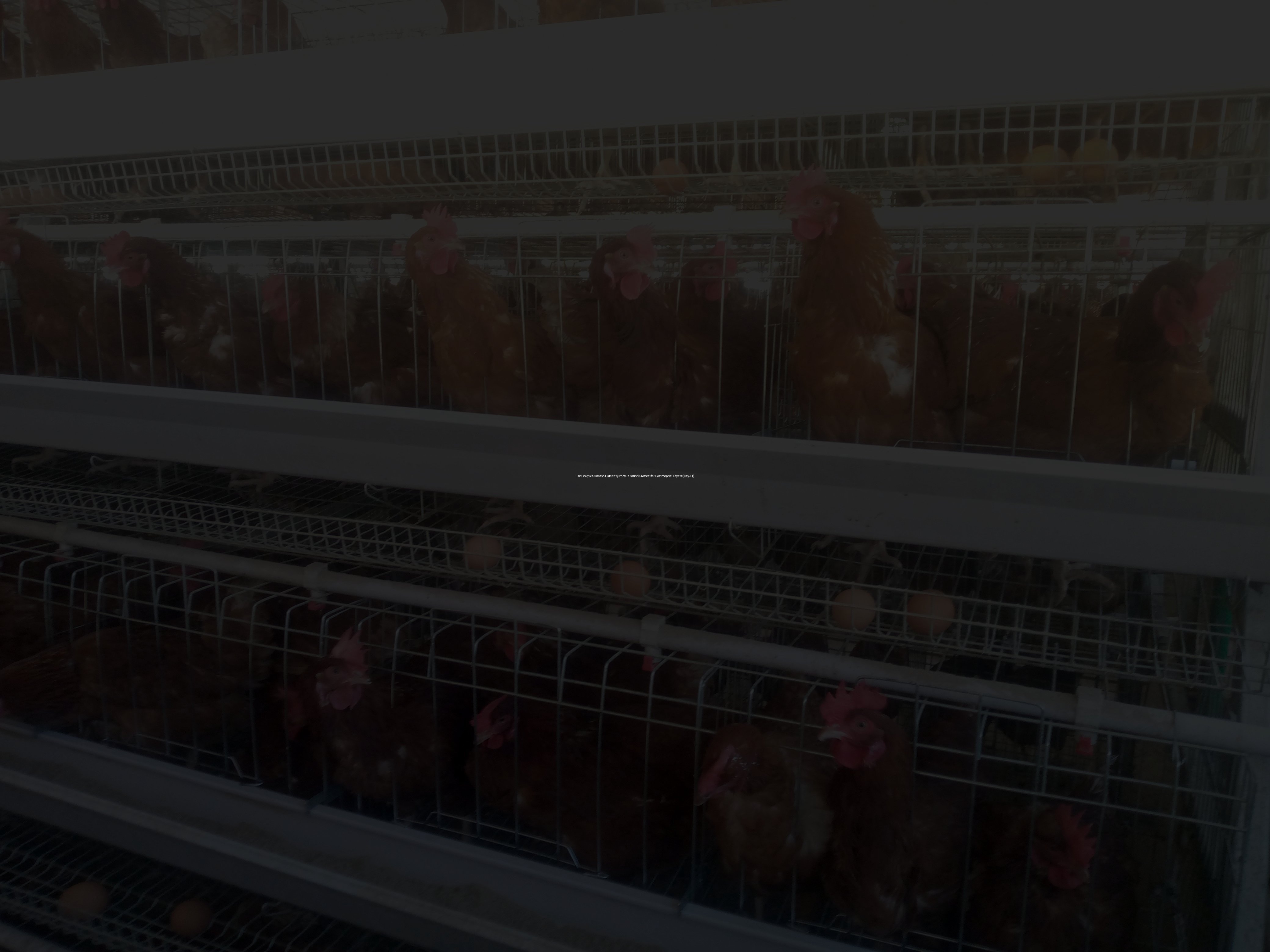
Marek's disease remains one of the most significant production threats in the poultry industry, particularly for commercial layer flocks where uniform growth and prolonged laying performance are critical economic drivers. For Hy-Line Brown stock, which is widely utilized in the egg production sector due to its efficiency and hardiness, the immunological strategy against Marek's disease must be precise and rigorously implemented from the very first moment of life. The standard target for any commercial hatchery is absolute; one hundred percent of day-old chicks must receive the selected Marek's vaccine subcutaneously to ensure comprehensive herd immunity and to minimize the risk of sporadic outbreaks that can devastate a production cycle.
The selection of the vaccine strain is a critical determinant of long-term flock health and performance metrics. While several strains are available, the combination of Rispens and HVT (HVT JBX or HVT B) is generally preferred for Hy-Line Brown lines due to their superior protection against virulent Marek's disease isolates and their compatibility with the breed's genetic background. The Rispens strain offers strong protection against infectious bursal disease and Marek's disease, while the HVT component provides broad-spectrum coverage against the herpesvirus. Utilizing this preferred combination ensures that the birds are equipped with a robust immune response that persists through the critical growth and early laying phases, thereby supporting the high standards required by commercial egg producers.
The logistical success of the immunization protocol relies heavily on the maintenance of a strict cold chain from the point of manufacture to the actual administration site in the hatchery. The vaccine is a live biological agent that is highly sensitive to temperature fluctuations and environmental stressors. Any compromise in the cold chain, such as exposure to temperatures above four degrees Celsius for even brief periods, can significantly reduce the viability and efficacy of the vaccine. Hatcheries must employ calibrated temperature loggers in all transport containers and storage units to ensure that the vaccine remains within the optimal range, as a single failure in cold chain integrity can render an entire batch of vaccines unusable and expose the chick group to unprotected risk.
Proper dilution of the vaccine is a technical step that requires meticulous attention to detail to prevent dosage errors that can lead to subclinical infections or reduced immunity. The vaccine should be reconstituted only immediately before use using the sterile diluent provided by the manufacturer, and it must be mixed gently to avoid foaming, which can denature the live virus. Overdosing, often a common operational error, can lead to vaccination myopathy or other adverse reactions in the chicks, while underdosing results in inadequate immune priming. Operators must strictly adhere to the volumes specified in the technical data sheet for each pen or compartment, ensuring that the concentration remains consistent across the entire flock being processed.
The method of administration is strictly subcutaneous, requiring precision to ensure the vaccine is deposited into the subcutaneous tissue rather than the deeper muscle or the epidermal layer. Subcutaneous injection allows for optimal absorption and distribution of the live virus throughout the body, facilitating a systemic immune response. Operators must be trained to use calibrated needles of the appropriate gauge, typically 23 to 25 gauge, to minimize tissue trauma while ensuring accurate delivery. The injection should be performed swiftly and efficiently to reduce the time the chicks are exposed to environmental stress, which can further compromise their immune development during this vulnerable post-hatching period.
Timing is a crucial factor in the hatchery immunization protocol, as the vaccination must be completed within a specific window after the chicks hatched and were handled for processing. The recommended timeframe is typically within the first few hours of the chick's life, ensuring that the immune system is primed before any potential environmental exposures. Delays in processing or bottlenecks in the treatment line can result in parts of the flock receiving the vaccine outside the optimal window, leading to inconsistent immunity levels. Hatchery management must strive for a smooth, uninterrupted flow where vaccination is integrated seamlessly into the processing line, ensuring that every chick receives the protection at the precise moment designated by the protocol.
Documentation and traceability are indispensable components of a professional immunization program, allowing for the audit of compliance and the investigation of any potential field failures. Every batch of vaccine used must be recorded with its lot number, expiration date, and the specific flock number it was administered to. This level of granularity enables producers to correlate field performance data with specific vaccine lots, helping to identify if a particular batch or strain had anomalies that affected protection levels. Maintaining these records is not only a best practice for quality assurance but is often a regulatory requirement for commercial operations, ensuring that the chain of custody for the biological agents is fully transparent and accountable.
For commercial egg producers, the practical takeaway from this protocol is that the integrity of the hatchery immunization is the foundation of a profitable and healthy flock. The Hy-Line Brown breed, when protected by a robust Marek's vaccination program, delivers consistent growth curves and high egg production rates, translating directly into better financial returns. By insisting on the one hundred percent subcutaneous vaccination standard, utilizing preferred Rispens and HVT strains, and enforcing strict cold chain and dilution controls, producers can mitigate the biological risks associated with Marek's disease. This proactive approach ensures that the flock reaches laying age with established immunity, allowing the operation to focus on maximizing production efficiency rather than managing disease outbreaks.
In conclusion, the execution of the Marek's disease hatchery immunization protocol for Hy-Line Brown chicks is a matter of operational discipline and technical precision. It requires a coordinated effort between the hatchery staff and the producer, with shared responsibility for maintaining the highest standards of biosecurity and care. Any deviation from the established guidelines, whether in vaccine storage, administration technique, or timing, poses a significant threat to the uniformity and health of the flock. By committing to these rigorous standards, commercial producers can secure the health of their investment and ensure sustainable production outcomes throughout the laying cycle.
Written by The Ekstreme Team
At Ekstreme Poultry Farm, we are dedicated to sharing insights, updates, and educational content to empower poultry farmers across Kenya.
Learn more about us →