
Tropical Hatchery Logistics: Securing Day-Old Chicks Safely in Kenya (Day 6)
Ekstreme Team
Ekstreme Poultry Farm
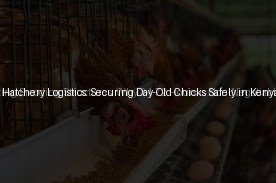
Welcome to Day 6 of your tropical poultry management journey, where the focus shifts decisively to the logistics of securing and transporting day-old chicks in the Kenyan climate. This phase is critical because the physiological stress experienced during transport directly impacts the uniformity and survivability of your flock over the following weeks. For novice to mid-scale farmers, understanding the nuances of breed-specific requirements during this transit window is the first step toward establishing a robust production baseline.
When comparing breeds in a tropical context, it is essential to recognize that commercial broiler breeds such as the Ross 308 and Cobb 500 have different tolerance thresholds for heat stress compared to dual-purpose layers like the Lohmann Brown during the transit phase. While broilers are bred for rapid growth, their higher metabolic rate makes them more susceptible to dehydration if ventilation is inadequate. In contrast, layer strains often exhibit slightly higher vigor but require careful temperature control to prevent early-onset heat exhaustion, which can set the stage for poor feed intake upon arrival.
The cornerstone of safe transport on this day is maintaining the internal environment of the chick box between 24 and 26 degrees Celsius. This temperature band is not arbitrary; it aligns with the optimal physiological range for day-old chicks to minimize energy expenditure on thermoregulation. In the Kenyan context, where ambient temperatures can fluctuate rapidly from morning coolness to midday heat, static monitoring is insufficient. You must rely on active ventilation strategies that create a consistent airflow over the chick layer without creating drafts that shock the immature immune system.
Proper vehicle inspection before loading is a mandatory technical step that many farmers overlook until problems arise. Begin by checking the integrity of the ventilation fans to ensure they provide a steady, laminar flow of air rather than turbulent gusts. Next, verify that the vehicle floor is clean, dry, and free of toxic residues, as chickens are highly sensitive to chemical vapors. Ensure that the boxes are stacked in a single layer where possible to prevent heat buildup at the bottom, and confirm that the securement straps are tight enough to prevent shifting but loose enough to allow natural airflow between the boxes.
Upon arrival at your farm, the immediate priority shifts to hydration, a step that is often rushed but is vital for gut health and nutrient absorption. Do not allow chicks to drink for the first three to four hours after transport to allow their body temperatures to stabilize, but have clean, lukewarm water available and ready. Introduce electrolyte solutions or glucose supplements into the water during this initial phase to help replenish fluids lost during transit and to provide an immediate energy source that combats the effects of travel stress.
A practical farmer takeaway is to implement a strict chain-of-custody protocol for your chick boxes. This means recording the departure time, arrival time, and the temperature readings at each checkpoint. By keeping a log of these metrics, you can correlate transport conditions with subsequent chick performance, such as feed conversion and mortality rates in the first week. This data allows you to adjust future logistics planning, ensuring that every kennel or van ride becomes more efficient and less risky for your investment.
Ventilation management during transit requires a balance between air exchange and heat retention. In the early hours of transport, especially in highland areas of Kenya, the temperature may drop, necessitating temporary reduction in airflow to conserve heat. However, as the sun rises and ambient temperatures climb, you must increase ventilation to prevent overgrowth. Use a simple digital thermometer attached to the outside of the box to guide these adjustments, ensuring that the internal microclimate remains within the safe 24 to 26-degree range throughout the journey.
Securing the boxes physically is as important as conditioning the air. Use rubberized containers that provide grip on the vehicle floor to prevent sliding during sudden stops. Ensure that the box lids are vented appropriately; too many vents can cause excessive draft, while too few will lead to heat and ammonia buildup. The goal is to create a stable, predictable environment that mimics the brooder conditions they are transitioning to, thereby reducing the shock factor that often leads to uneven feathering and leg weakness later in production.
Finally, consider the branding and packaging of your chicks as a logistical factor. Reputable hatcheries in Kenya often provide insulated boxes that offer a buffer against external temperature swings. When negotiating your supply chain, insist on these quality packs rather than opting for cheaper, non-insulated alternatives. The small premium pays off in the uniformity of your flock, as every chick receives the same level of care from the moment they leave the incubator until they reach your brooder, setting the foundation for a successful and profitable production cycle.
Written by The Ekstreme Team
At Ekstreme Poultry Farm, we are dedicated to sharing insights, updates, and educational content to empower poultry farmers across Kenya.
Learn more about us →